Review no 16: Samanta Schweblin, Fever Dream (Argentina)

Translated from the Spanish by Megan McDowell

AMERICAS AND THE CARIBBEAN

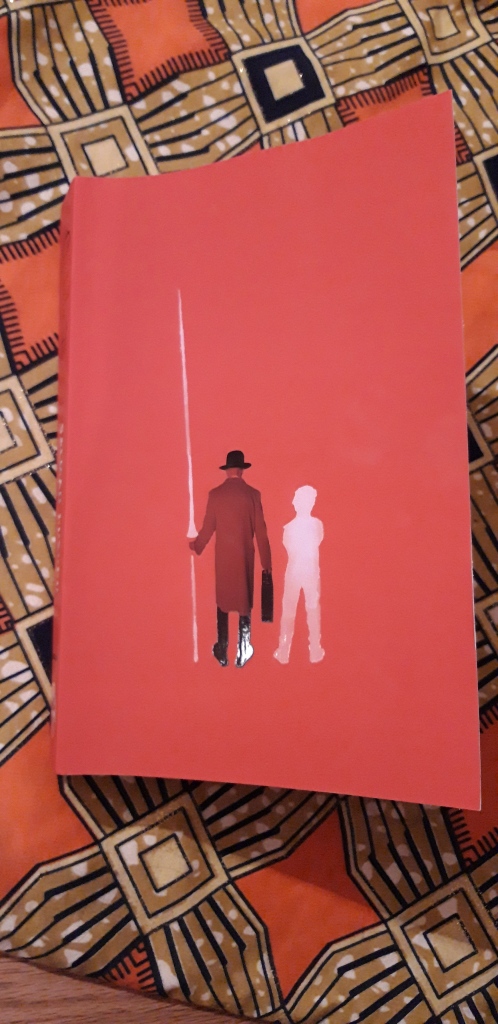
This is a short sharp shock of a book, a hallucinatory horror story that builds up a constant hum of excruciating tension over its 150 pages.

Published in Spanish as Distancia de rescate (Rescue Distance), the modern gothic, body-swap novella is apparently inspired by Argentina’s environmental problems, and is probably best consumed in one suspenseful sitting.

In 2017 Samanta Schweblin was featured on the second Bogotá39 list, featuring the best 39 Latin American authors under the age of 39. Fever Dream appeared in English translation in the same year, and instantly received a lot of attention. It was shortlisted for the Man Booker International Prize in 2017 and won the Shirley Jackson Award for best novella in the same year. Schweblin had already won the Spanish language Tigre Juan award in 2014, the book’s initial year of publication.

I first heard of Fever Dream via social media. Then during August – since 2014 also known as Women in Translation (WIT) month – I saw that it had been included at number 3 on a fascinating list of the 100 best books by female writers in translation compiled by the founder of WIT month. I decided the time had come to get hold of a copy.

Fever Dream opens with a woman, Amanda, lying incapacitated and mortally ill in a hospital bed, with a boy sitting by her side, whispering into her ear. He “explains” that:

“It’s the worms. You have to be patient and wait. And while we wait we have to find the exact moment when the worms came into being.”

So Amanda begins to run through her memory of the events leading up to her arrival in hospital, starting with her meeting with the boy’s mother, glamorous gold-bikini-wearing Clara. Clara lives next door to Amanda’s holiday rental, where she is staying with her almost preternaturally self-contained and mature little girl, Nina, who sweetly carries around a giant stuffed mole.

A sense of foreboding surrounds references to the little girl:

“Where is Nina now, David? I need to know.

Tell me more about the rescue distance.

It changes, depending on the situation. For example, in the first hours we spent in the vacation house, I wanted Nina close by at all times. I needed to know how many exits the house had, find the areas of the floor with the most splinters, see if the creaky stairs posed any danger … So the rescue distance is important?

Very important.”

The screw tightens, and as Amanda searches her memories to piece together events the boy sometimes stops her:

This isn’t the exact moment. Let’s not waste time on this.

Why do we have to go so quickly, David? Is there so little time left?

Very little.

I don’t always find lists that seek to establish some kind of canon to be the best places to find new reads. Like prize lists they can be problematic and subjective (my recent bad – so bad! – experience with Salman Rushdie’s Quichotte being a case in point). However, in this case Schweblin fully deserves the plaudits, and I’d be interested in reading more of her work … when I’ve got through the remaining 375 or so books I need to work through for this little project/life sentence (see the full list at https://readingandwatchingtheworld.home.blog/the-countries-by-region). If you have any suggestions or recommendations do get in touch!

Review no 15, Dora Maurer: artist (Hungary)

Exhibition @ Tate Modern, London, UK from August 2019 until July 2020

EUROPE

“Generally I am not as interested in the finished work as I am in the way it comes about, which is to say the question of realising a task that I have set myself, the idea” – Dora Maurer

I went to Tate Modern recently to see an exhibition of the work of Hungarian artist Dora Maurer, which is on display until next summer. Maurer was born in Budapest in 1937, and the exhibition highlights work from the 1970s onwards. During the course of her long career she has made use of a wide variety of media, including photography, video, painting and sculpture.

Maurer emerged as an experimental, avant garde artist, whose work ran counter to that sanctioned by the state-sponsored socialist orthodoxy in place around her at the time. She trained as a graphic artist and printmaker, and also worked as a curator and teacher.

The early work demonstrates her enduring obsession with movement and geometric composition. I found the microscopic focus on mathematical precision, and the effect of minute tweaks to angles and poses a little challenging, and not easy to interpret. What comes out of this exhibition though is a real sense of enjoyment in the thrill of creation, and deep engagement in the process of making her art.

One room is dedicated to video work, including a hypnotic triptych of films, entitled Triolets. The spliced together videos move mechanically from side to side to a wordless female warble. This work demonstrates Maurer’s long-standing curiosity about the nature of repetition, movement, perspective and perception, and what she has termed ‘displacement’. It also exemplifies her interest in the effect of music on these processes in her art. (And caused two of my children separately to remark “why are you listening to cult music?” as I played the video back on my phone.)

My companion at the exhibition (let’s call her ‘the redhead’) noted similarities to Bridget Riley in Maurer’s later work, which was much more boldly coloured, as she moved away from black and white. She experimented with layering colour, watching it change in the light and, as ever, subverting perceptions, here through anamorphosis.

This work, using acrylics and titled Projected Quasi Images, was commissioned in the 1980s by collector Dieter Bogner for the walls of a Viennese castle, and it reminded me a little of the old Transport for London seat covers (though not in a bad way). However, if Maurer’s work sometimes has a familiar, even derivative feel, with a career dating back to the 1960s, it is quite likely that her ideas preceded or inspired those of others rather than vice versa.

Later her focus on colour became even more profound, as her interest grew in “the way colour behaves, its vibrations and imaginary movements” (art historian Dávid Fehér). The most recent series, developed during 2007-16, which explores colour and rhythmical, three-dimensional movement, has been described by Maurer as ‘form gymnastics’. The example below is one of her Overlappings paintings.

The exhibition does not seem to have been widely publicised, but is well worth a visit, and there is no charge for entry.

Review no 14: Salman Rushdie, Quichotte (India)

FAR EAST, SOUTH ASIA AND AUSTRALASIA

“It may be argued that stories should not sprawl in this way, that they should be grounded in one place or the other, put down roots in the other or the one and flower in the singular soil; yet so many of today’s stories are and must be of this plural, sprawling kind, because a kind of nuclear fission has taken place in human lives and relations” – Quichotte, p.114.

I chose Quichotte by Salman Rushdie for my book by an Indian male author, although Rushdie left India in his second decade of life to attend an English public school, and now lives in the USA.

I was partly swung by the fact that this book was shortlisted for the 2019 Booker Prize. The fact that I’d never read a book by Rushdie before sealed the deal. He’s a big name of course. His acclaimed novel Midnight’s Children won the Booker in 1981, as well as the ‘Booker of Bookers’ marking the prize’s 25th anniversary in 1993, and the ‘Best of the Booker’, marking the prize’s 40th anniversary, in 2008. Frankly I should have read Midnight’s Children instead, shouldn’t I.

Quichotte is influenced by Don Quixote, the classic work of early metafiction by Spanish writer Miguel de Cervantes. I haven’t read Don Quixote, as that felt too much like homework even for me, but evidently Rushdie’s choice of structure owes a lot to that work.

Quichotte is the name of a fictional Indian-American man and TV addict who sets off on an ill-advised quest to woo his favourite TV host, Salma R. By some kind of magical realist alchemy, early in his road trip he conjures up, Pinocchio-style, a son, a real son, Sancho, and they buddy up. Disorientatingly, we are rapidly made aware that Quichotte is himself a character in a novel by a man pen-named Sam DuChamp, an Indian-American writer of trashy spy novels. Sancho, a supernatural entity inhabiting a fiction within a fiction, is full of metaphysical questions about the nature of existence and, meanwhile, a romp is taking place involving Miss R and the supply of illegal narcotics.

The prose is free-wheeling and playful, and full of hot-blooded flights of imagination and self-consciously clever, circular cultural references old, retro and startlingly up to date; it can reference classical mythology, popular film and social media emoticons in the same breath. However, I found Quichotte one of the most frustrating and self-indulgent books I’ve read for a long time, or maybe ever.

Despite Rushdie’s argument in favour of the sprawl, I found this novel wandered too much, to the extent that it just became, well, boring. The endless lists (exemplified by a seemingly inexhaustible digression on snoring), in-your-face punning and knowing asides became infuriating, even as I admired Rushdie’s erudition and verbal dexterity. Here’s a typical passage, on Salma R.’s use of electro-shock therapy: “It felt like a Christmas visit from the Sanity Claus. (She heard Chico Marx laughing, Ha-ha-ha-ha-ha! You can’t fool me. There ain’t no Sanity Claus! But there was, there was. He was a voltage-powered elf who cleaned up your sanity.)”

Rushdie is well-known for his use of magical realism, but in this novel I found it too brash, unlike the pared-back manipulation of the device in Téa Obreht’s latest novel Inland, for example. The book’s self-conscious post-modernism, with its layered plots and narratives, and stories within stories, means the reader is kept from being drawn into the world(s) that Rushdie has created. The book isn’t designed to be immersive, and (Don Quixote-style) you can never forget that you are reading a work of fiction. It felt as though Rushdie wanted to show off, more than entertain; he’s a taker not a giver.

But perhaps this is unfair. There are also many plus points in this novel. Rushdie is not short of imagination, which is a boon, and if you’re prepared to go along for the ride, this book is no doubt wildly entertaining. Rushdie adeptly tears apart the bizarre modern nature of reality, where what is shown to us via screens can seem more real than reality, but simultaneously strangely distancing. He asks important questions about belonging and the meaning of truth, and provides a damning study of the brainless racism that is still endemic and increasingly apparent in countries like the USA and the UK. But … I found it overlong and way too in your face – sorry.

Review no 13: Félix Vallotton (1865-1925), Painter of Disquiet (Switzerland)

EUROPE

I’d seen reproductions of Swiss artist Félix Vallotton’s work posted up all over the London transport network to advertise the recent exhibition of his work, and was determined to make it to the Royal Academy before the show ended on 29 September 2019.

Born in Lausanne, Switzerland, Vallotton left home for the French capital, Paris, at the age of 16. The RA’s exhibition guide says that Vallotton was described as the “very singular Vallotton”, and his versatility is astounding. He painted vivid and intense still lifes and landscapes, but was also well known for his piercing, satirical eye, his involvement with the resurgence of printmaking and his illustrations for satirical and left-wing journals. A contemporary of French artists Bonnard and Vuillard, he remained outside the mainstream.

The early still life above is brilliant in its technical virtuosity, with the hyper realistic reflective surfaces of the jug and the rumpled fabric. Later work included illustrations for the literary and artistic magazine La revue blanche, and his emergence as a prominent graphic artist.

Vallotton’s woodcuts were especially acclaimed, and a series of intense vignettes catalogued scenes of domestic intrigue and hypocrisy. For example, his work Cinq Heures, references the time, after work, when a bourgeois professional might call on his mistress at home before returning to his wife.

In a review in The Times, the critic Rachel Campbell-Johnston stated that Vallotton could be “an awful painter”, but I couldn’t disagree more. His technical skill is undeniable (as in the painting above), and when eschewing realism, his paintings are full of brooding intensity or knowing vitality. I loved the large, perhaps semi-ironic tryptych Le Bon Marché (which I was prevented from photographing, as the gallery hadn’t been able to attain permission to reproduce it) recording crowds in a 19th century department store, and the rise of incipient capitalism in Paris.

Later work focusing on interiors and home life retained that brooding and intense feel, following Vallotton’s marrage to the widowed, and rich, Gabrielle Rodrigues-Henriques. With the marriage came three step-children.

The painting reproduced at the bottom of the post below, The Red Room, Etretat, was modelled from a society photograph of his wife, but into it has been plonked Gabrielle’s baby niece, determinedly ripping a piece of paper into scattered pieces, and familiar enough for anyone who has spent time with small children. A pleasant domestic scene, though does it indicate a sense of unease at the disorder of family life?

In the painting Woman Searching through a Cupboard an uncanny feel is added to that feeling of domestic horror everyone has surely experienced while despairingly trying to unearth a crucial item when it’s long past bedtime.

Another painting, Le Ballon, shows a charmingly bonneted child chasing a ball, but the looming shadows from the over-arching trees lend a sinister feel to an evocation of childhood innocence. Parallels have been drawn between Vallotton’s output and the later work of Edward Hopper, and even Alfred Hitchcock. From 1904, however, Vallotton moved onto the female nude, and then landscape, and his arch subversion of the everyday largely disappeared from view.

All in all this was a fascinating and atmospheric exhibition of work by an artist I was unaware of before this year. His work is well worth searching out.

Review no 12: Edna O’Brien, The Little Red Chairs (Ireland)

EUROPE

Irish writer Edna O’Brien is probably best known for her classic prize-winning novel Country Girls, published in 1960.  It dealt with sex and social issues in post-World War 2 Ireland, and was reportedly not only banned there, but set alight and denounced in church.

O’Brien’s career has spanned some 60 years, and she has been garlanded with praise. Her work has focused on women’s interior feelings, and their difficulties in relating both to men, and to society. Literary behemoth Philip Roth described her as the most gifted woman writing in English.

She published her latest, intriguing-sounding novel, Girl, this autumn, at the age of 88. Her subject matter has moved far beyond the Ireland of her youth: the latest work follows the experiences of a girl captured and forcibly married into Boko Haram.

I read her last novel, published in 2015 after a 10-year hiatus. The Little Red Chairs is a humane novel which appears to have been strongly influenced by events in the life of the convicted Balkan war criminal Radovan Karadžić.

Karadžić successfully evaded arrest for nine years, apparently living in plain sight in the Serbian capital Belgrade as well as in Vienna , Austria, and working as some kind of alternative healer and sex therapist, peddling the use of “human quantum energy” to resolve sexual problems.

In The Little Red Chairs a man accused of Balkan war crimes, presenting himself as an expert in holistic healing and sex therapy, incongruously arrives in an Irish village. Doctor Vladimir Dragan, with his white beard and top-knot, pronounces about herbal medications and talks Latin.

Doctor Vlad, with folkloric charm, enchants those around him, and one woman, Fidelma, goes so far as to ask for his help in conceiving a child. Labyrinthine, the book has both comic and terrifying moments, as Doctor Vlad’s past begins to catch up with him.

The book has a broad canvas, travelling from rural Ireland to London and to the International Criminal Tribunal for the former Yugoslavia in the Hague, the Netherlands. It brilliantly conjures up the everyday as well as the arcane, and asks searching questions about the nature of evil.

Review no 11 – Rojo (Red): film by Benjamín Naishtat (Argentina)

AMERICAS AND THE CARIBBEAN

First, you don’t need to know anything about 1970s Argentinian politics to enjoy this film, but I dare say it helps. Frankly I know next to nothing about Argentinian politics and I was blown away.

Second, you may struggle to track Rojo down to a local cinema. My local Picturehouse in South London didn’t seem to be showing it, so I travelled to Russell Square to the Curzon Bloomsbury. What a gorgeous cinema, small but perfectly formed, and specializing in world cinema and art house films.

I expected to be the only member of the public in a screening of an obscure Argentinian film at 10.40 on a Monday morning, but the place was buzzing with people, particularly cultured pensioners, queuing for coffees and freshly baked cakes and filling the seats.

The film, written and directed by Benjamín Naishtat, opens with a suburban house, from which people emerge, one by one, with abandoned domestic items. People are starting to go missing, but no one seems to be talking about it.

The film is set in 1975. The year before, President Juan Perón died and was succeeded by his wife, Isabelita. However, austerity measures and high inflation led to strikes and popular discontent. Finally, in March 1976 a military coup resulted in the installation of a three-man junta. Hundreds were arrested, Isabelita Perón was exiled, and suspected left-wing activists, including students, were tortured and murdered.

We are given none of this historical background, and the political situation is only hinted at. The action centres on the life of Claudio (played by Darío Grandinetti) , a lawyer, his teenage daughter Paula (played by his real-life daughter, Laura Grandinetti) and his wife, Susana (played by the excellent Andrea Frigerio). They live a privileged, upper middle-class life that involves tennis, free tickets to events, gallery openings and sailing through road blocks. I liked the cars and the artfully retro interiors, homes, offices and restaurants, full of polished Formica and overflowing ashtrays.

The film is heavy on symbolism. A bullock is wincingly castrated and a stuffed wild cat snarls from inside a glass case. In Paula’s dance class she enacts a highly choreographed tableau of entrapment and repressed violence. An eclipse scene hammers home the principal point: don’t look directly at things, you could get hurt. Flies multiply. The fabulous score, by Vincent Van Warmerdam, helps to accentuate the tension throughout, loading even the most unassuming episode with a sense of pervading dread, occasionally defused with humour.

Early, key events, when a disagreement in a restaurant between Claudio and another man escalates, are compelling and full of menace. When the lawyer’s wife enters the scene time slows down, her face is shown in close up, every gesture and every feature are lovingly hovered over.

Someone’s brother goes missing, and a Columbo-style, celebrity super-sleuth enters the fray. Sinclair (played by Alfredo Castro) is a great character, and suspicious of the inscrutable Claudio. Meanwhile, someone’s son goes missing, but no one seems to care. Claudio’s life has become something of a noirish waiting game, as the tension builds, tightening like a fist.

All the performances are excellent in this gripping film. Watch the trailer here:

Review no 10: Oyinkan Braithwaite – My Sister, The Serial Killer (Nigeria)

AFRICA

As I’m trying to work my way through books, film and art from across the world, it makes sense to ensure that I’m not spending too much time in one region. I need an even spread of countries from all five of the regions that I’ve divided the world -roughly evenly – into.

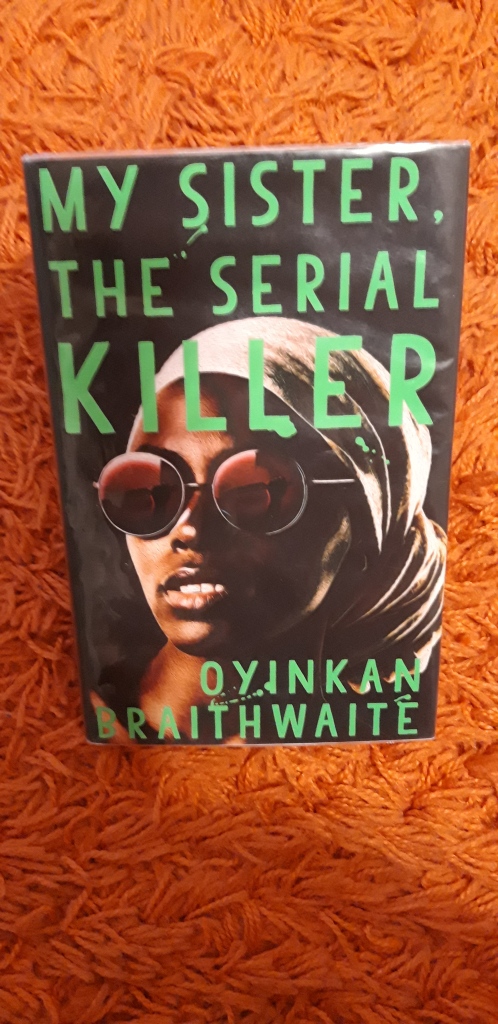
So I’m back in Africa, and as far away from the tone of my last book from the continent as you get. Oyinkan Braithwaite’s My Sister, the Serial Killer is a quick, fun read, and a book that was long-listed for the Booker Prize 2019.

Oyinkan Braithwaite is a Nigerian writer. I recently read a quote from Elleke Boehmer, Professor of World Literature in English at Oxford University, describing the “Chimamanda glamour effect”. It may be that the huge success of Chimamanda Ngozi Adichie, who won the Orange Prize in the UK in 2007 for Half of the Yellow Sun, has led to a surge of interest in Nigerian female writers.

My Sister, the Serial Killer opens with Korede, a nurse, helping to cover up a murder. Korede’s glamorous, social media-obsessed, fashion-designer sister Ayoola has killed her latest boyfriend (he is not the first), and older sister Korede feels compelled to protect her. The young women come from a wealthy background that from the outside looks privileged, but there are dark family secrets lurking beneath the surface. Meanwhile, Korede has a massive crush on her hospital colleague Dr Tade, and when Ayoola notices him, Korede starts to fear for his safety.

Beautiful and beautifully dressed, with a sadistic enjoyment of death and a potentially incriminating love of Snapchat and Insta, Ayoola is a great character. She reminded me of Villanelle in recent TV series Killing Eve. ‘”We were in the room together and he suddenly starts to sweat and hold his throat. Then he starts to froth at the mouth. It was so scary.” But her eyes are on fire, she is telling me a tale she thinks is fascinating. I don’t want to talk to her but she seems determined to share the details.’

I also enjoyed the little insights into Nigerian culture that the reader is given, which include widespread official corruption, and discovered a new drink that I’d like to try, the chapman.

The plot moves along very quickly, with short punchy chapters, sometimes barely two sentences long, and never longer than a handful of pages. If I had to criticise, I’d have to admit to finding the ending a little flat, but overall this was a really enjoyable read.

Other female writers from Nigeria worth checking out include Ayobami Adebayo, whose novel Stay With Me was recommended to me by my friend Emily, and which we read as part of our long-running book club. I’ve also heard praise for Nnedi Okorafor’s sci-fi novella Binti.

Review no 9: Pain and Glory (Dolor y gloria) film by Almodóvar (Spain)

EUROPE

I went to see this film not knowing what to expect. I am not an expert on Pedro Almodóvar’s work, having previously only seen one of his films (Bad Education, in 2004). However, the terms of my little project required that I watch a Spanish film, and this sounded intriguing. This is definitely a movie I’m pleased to have seen.

The vividly and gorgeously shot film stars Antonio Banderas as Salvador Mallo, an attractively angst-ridden Spanish film maker. Mallo lives alone among gorgeous works of art in a colourful, stylish Madrid apartment. His life is full of regrets (about his work, about being a bad son, about being a bad boyfriend to his ex-boyfriend), increasing bodily aches and pains and a massive creative block. By focusing on the story of a film maker, the film can hardly avoid being interpreted as at least semi-autobiographical, and it is deeply self-referential. (In one wry scene, for example, Mallo’s mother bitingly and incongruously expresses her disdain for auto-fiction.)

Almodóvar films have a reputation for melodrama, but Banderas plays Mallo with sensitivity and understated humour. Banderas’s charismatic performance was a real tonic compared with the meat-head roles he played in US blockbusters of the 1990s. That is not to say I never rated Banderas as an actor in English-speaking roles. I really enjoyed his performances in films like Desperado. But this role requires Banderas to reveal emotional depth, often through body language and expression alone, and he was utterly compelling. I’m not the only person to think so: he recently won the Cannes Film Festival Award for Best Actor for this role.

The film darts back and forth between Mallo’s poverty-stricken (but always aesthetically pleasing) childhood in a rural village with his beleaguered, beautiful mother, played by Penélope Cruz, and the present day. Mallo has had a successful career, becoming the only Spanish film director widely known outside Spain (hmmm, sound familiar?) but has held onto grudges for decades. Despite the unwavering support of his friend Zulema (Cecilia Roth), plus a helpful maid, Mallo is depressed and battling self-condemnation, some serious mummy issues and his dodgy health.

Mallo’s classic work Sabor is being rereleased after some 30 years, and he engineers a meeting with the principal actor who worked on the film, junkie Alberto Crespo (played by Asier Etxeandia), with whom he has maintained a long-running grievance over Crespo’s original performance. (Interestingly, Antonio Banderas did not work with Almodóvar for some 20 years, after acting in Tie Me Up Tie Me Down.)

After Crespo introduces Mallo to heroin I thought the film might take a darker turn. Instead, the drug scenes provide the basis for some of the lighter set pieces in the film, with a scheduled live Q&A session between Mallo, Crespo and cinema-going Sabor fans providing some hilarious moments. The introduction of drugs also cues Mallo’s drifting memories, as he conjures up hallucinatory recollections from his earlier life. The film’s conclusion, where it all gets even more meta, was life-affirming and optimistic. Watch the trailer here:

Review no 8: Leila Slimani, Chanson douce (Lullaby)

MOROCCO / FRANCE : NORTH AFRICA, MIDDLE EAST AND CENTRAL ASIA

My daughter told me I had to be honest about how long this book took me to read. I bought it in French in Paris a year ago, and did little more than dip into it until this summer. I studied French at university, and inspired by that sense of zeal that comes with a nice relaxing holiday I’d thought it would be a great way of refreshing my rusty language skills…

However, I’d underestimated quite how rusty those skills had become, and it took me until I was about 100 pages in before I could read a single page all the way through without the aid of a dictionary. I’m not sure whether that’s because my French had improved just enough, or whether I’d simply become used to Slimani’s vocab preferences.

Slimani was born in Rabat, Morocco, growing up in a French-speaking family. She moved to Paris at the age of 17, and worked as a journalist. Her first novel, Dans le Jardin de l’Ogre (‘In the Ogre’s Garden’), appeared in 2014, and won a Moroccan literary award. It was published in the UK in 2019 as Adele. I read that novel, which focuses on a sex-addicted, dissatisfied mother, in English, and enjoyed it, a sort of modern-day Madame Bovaryesque fever dream.

Chanson douce or Lullaby is Slimani’s second published novel, but was the first to appear in English. In France, it was a winner of the prestigious Prix Goncourt. Its massive success in the UK must be partly due to the fact that Slimani has tapped into the anxiety, exhaustion and everyday frustration that (amid the many joys of parenthood) encapsulate the experience of parenting young children.

It must also be down to the fact that once you have read the devastating opening paragraph, you are compelled to read on: “Le bébé est mort. Il a suffi de quelques secondes. Le médecin assuré qu’il n’avait pas souffert. On l’a couché dans une housse grise et on a fait glisser la fermeture éclair sur le corps désarticulé qui flottait au milieu des jouets. La petite, elle, était encore vivante quand les secours sont arrivés. Elle s’est battue comme un fauve. On a retrouvé des traces de lutte, des morceaux de peau sous ses ongles mous. Dans l’ambulance qui la transportait à l’hôpital, elle était agitée, secouée de convulsions. Les yeux exorbités, elle semblait chercher de l’air. Sa gorge s’était emplie de sang. Ses poumons étaient perforés et sa tête avait violemment heurté la commode bleue.”

Motherhood poses a dichotomy: educated, professional women can feel stultified at home with small children, but at the same time pursuing a career is exhausting when combined with broken sleep and running a home. Finances are also an obvious issue. But working generally involves finding paid child care, which means entrusting a stranger with the care of what is most precious. Parental guilt and ambivalence are pervasive – and the 21st century normal.

This novel doesn’t shy away from examining that aspect of femininity (it is still very much a female issue) in excruciating detail, as it invites us into the lives of lawyer Myriam, who lives with her music producer husband Paul and their two children. But it also slowly builds up a detailed picture of the life of disillusionment and everyday misery and poverty of Louise, Myriam and Paul’s nanny.

The descriptions of her time with the family are foreshadowed by the violence to come, and Slimani is a master of metaphor. In the park, Louise takes pictures of the children, Mila and Adam, to show their parents, lying on “un tapis de feuilles mortes, jaune vif ou rouge sang”/”a carpet of dead leaves, bright yellow and blood red”.

Slimani was partly inspired in writing the novel by a double murder case involving two young children in New York in 2012. The children’s nanny was later found guilty of having caused their deaths.

But the novel is also inspired by more personal events in Slimani’s history. During her childhood she was partly raised by a nanny, and in an afterword in the English edition she remembers noticing, at the age of 12, her nanny’s increasing depression and aggression. The nanny had spent 18 years living with the family, and had sacrificed her own chances of marrying and having children.

As an aside, I noticed something while flicking through the English edition, which I found hugely amusing for its reinforcement of stereotypes about the self-control of the appetites of women in Paris. In the French edition is a description of a group of nannies chatting in the local park and “grignotant la fin d’un biscuit au chocolat” (nibbling the end of a chocolate biscuit). In the same scene in the English edition, translated by Sam Taylor, the nannies “nibble chocolate biscuits”. No longer merely the ends, and no longer singular biscuits but several!

The novel is immersive, and Slimani’s style is hypnotic. Marketed as a thriller, the book is not a thriller in the typical sense – the book opens with the children’s murder, and we know the identity of the suspected perpetrator of the crimes from the start. However, the psychological intensity is ramped up little by little in a riveting read that focuses a forensic gaze on unpleasant truths to do with inequality, entitlement and also race that lie at the heart of modern society.

Review no 7: Colson Whitehead, The Nickel Boys (USA)

THE AMERICAS AND THE CARIBBEAN

It might seem like cheating to discuss a book by an American author so early on in this project, when the whole point is surely to open my eyes to other parts of the world. But after reading this short, devastating and immersive book I felt it had earned a place on the blog.

Colson Whitehead’s last novel, ‘The Underground Railroad’, won both the US National Book Award for Fiction and the Pulitzer Prize for Fiction.

‘The Nickel Boys’ deals with the physical and metaphorical exhumation of the darkest recesses of USA history, and a part of its history about which I really knew very little.

The author has used as his inspiration the story of the US’s largest reform institution, the Dozier School for Boys in Marianna, Florida, which only closed in 2011. Racially segregated until the late 1960s, the school was dogged by long-standing allegations of abuse. The remains of many young boys were subsequently found in the grounds. A support group has been established by former students of the school.

The spare prose makes clear the horrors of the reform school to which Elwood Curtis, an academically brilliant young black boy, is consigned through a miscarriage of justice. However, the novel is never gratuitous in its evocation of Jim Crow-inspired violence and psychological subjugation. We are given just enough to paint a haunting picture.

The reader is emotionally involved in the plot, which twists and turns engrossingly, and is not without elements of pithy humour.

The novel discusses Martin Luther King‘s ideas and asks how one can challenge systemic racism. This all makes the novel sound very heavy-going and dry, but although it deals with serious issues, it is always a page-turner. This is down to Whitehead’s deft handling of the subject matter, and his application of a light touch where it’s needed.

The Nickel Boys was published earlier this year by Little, Brown, and it is a brilliantly written novel that I would recommend unreservedly.

“This was one place, but if there was one, there were hundreds, hundreds of Nickels and White Houses scattered across the land like pain factories.”