Turkish film Kedi (Cat)

A month of Turkish culture wouldn’t work without a film. In his book Istanbul: Memories of a City the celebrated writer Orhan Pamuk notes that the Turkish film industry peaked in the late 1950s, when it came second in the world only to India, and released around 700 films every year. However, from the 1970s it went into decline, although it has experienced something of a resurgence since the late 1990s.

We’ve had a close family bereavement this month, plus my daughter’s had covid and my husband has broken his hand, so amid all the stress a serious, critically acclaimed, emotionally raw film was not what I was after. That meant not watching 2008 film Three Monkeys (shortlisted for an Oscar) or 2015 film Mustang, and it meant not seeking out a documentary on femicide that is a new UK-Turkish Oscar submission. So I settled on 2016 documentary film Kedi (Cat), directed by Ceyda Torun, which focuses on the stray street cats of Istanbul.

We were introduced one by one to a number of cats, all with very different natures, which had been semi-adopted by various traders in the city. At times it steered perilously close to sentimentality, but overall I loved the film, which was entertaining – and kind of calming.

Often the presumably Go Pro-type camera was at cats-eye level, as we followed the various animals on their jaunts around the city, and observed their interactions with the locals. Gamsiz (Carefree) had a sometime-home at a local bakery, and was always getting into scrapes and ending up at the vet, but was very happy-natured, while Durnan (Smoky) was rather aristocratic and well-mannered, never scrounging for titbits directly, but biding his time politely outside a local restaurant.

I was particularly amused by one particular (bad-natured) cat, Psikopat (Psycho), and her “husband” Osman Pasha (named after a famous Ottoman field general). There was a fair bit of anthropomorphising going on in this film.

We were introduced too to a few quite vulnerable people who found that feeding the streets cats helped with their mental health – one woman announced that her therapist believed she was trying to heal her own emotional wounds by tending to the cats so carefully, as she went on her daily rounds with bags of freshly cooked chicken; one man even read a kind of divine intervention into his encounter with the street cats of Istanbul, feeling that he had been somehow saved by caring for them.

Elsewhere people alluded to the cats’ alien and mesmeric qualities, that nevertheless do not prevent people from forming close bonds with them.

Our cat Mog died a couple of years ago now – maybe it’s time to think about a new kitty. If you’re not an animal lover, this film probably won’t appeal. But if you’re someone who is quite fond of cats, it’s definitely worth a look.

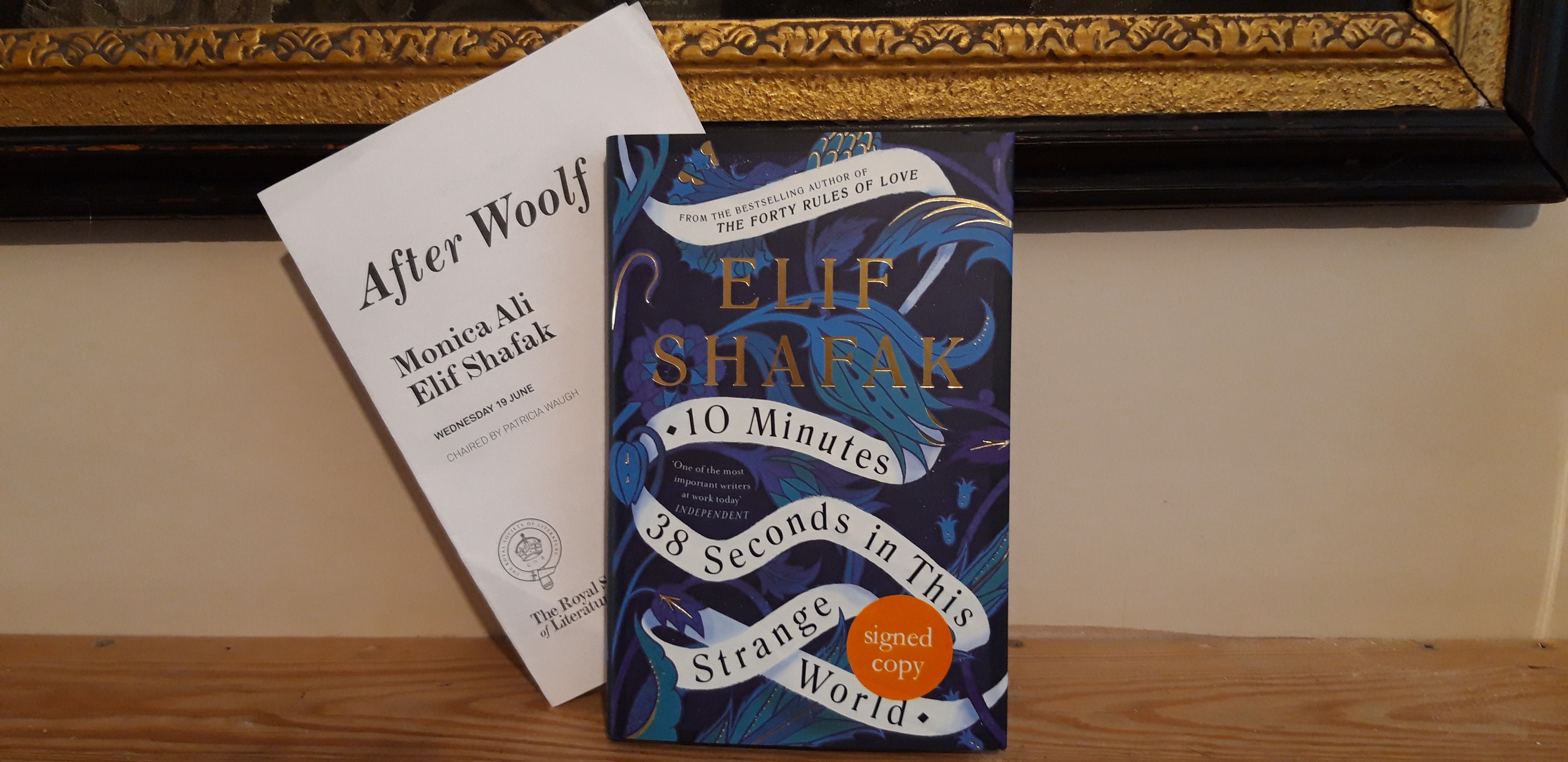
Elif Shafak’s novel ’10 Minutes 38 Seconds in this Strange World’ (Turkey)

NORTH AFRICA, MIDDLE EAST AND CENTRAL ASIA

This is a bit of a throwback post, as some of it was first posted by me in 2019, and was in fact my fifth ever review on the blog. I’m re-posting with some additional discussion of publication prospects in the West for Turkish authors, as part of my month of Turkish cultural appreciation.

Translator from the Turkish Nicholas Glastonbury, writing in the Los Angeles Review of Books in May 2021, noted that “In various conversations with translators, agents, and colleagues, publishers often articulate that they have informal quotas for writers beyond Europe (e.g., ‘We already have a Turkish author’)”. Elif Shafak of course is “the” Turkish female writer read most widely in the UK and other Western nations, fairly or not.

Shafak is living effectively in exile from her homeland: by writing about controversial topics, such as the Armenian genocide, she came into conflict with the authorities, which also apparently see her engagement in her fiction with topics such as the abuse of children as tantamount to their promotion.

Since settling in the UK and starting to write novels in English (which are then translated into Turkish for readers from her home country), she has appeared on a number of prestigious UK-based prize lists, including the Booker shortlist, and she has made it onto the recently announced 2021 Costa longlist for best novel for her latest release, The Island of Missing Trees. Her mastery of English is impressive.

I went to see Elif Shafak speak at an event at the British Library in London in mid-2019, and was impressed. A political scientist and champion of minority rights as well as an author, she’s extremely personable and spoke intelligently of the need for engagement between cultures in order to challenge and break down populist stereotypes and prejudices. She also spoke thought-provokingly about our expectations of literature from other places: for example, our preconceptions mean that we might not expect, say, an Afghan woman to write a work of sci-fi.

Interestingly, in light of this remark, Glastonbury pointed out in his 2021 article that UK and US publishers often have unstated criteria in mind when considering whether to publish a Turkish novelist: a reason for rejection might often be down to the fact that a manuscript “did not play into the predominant scripts that the World Literary Market has set for Turkish writing: if there’s no ‘East meets West’, no ‘tradition meets modernity'”, then it doesn’t fit the mould. 

Shafak’s Booker-shortlisted 10 Minutes 38 Seconds in this Strange World, published in 2019 by Viking, follows the life of a murdered prostitute, Tequila Leila, through a series of vignettes. These are experienced in time-bending flashback as her mind is shutting down in the 10 minutes and 38 seconds after her killing.

There is certainly a “tradition vs modernity” storyline here. The daughter of successful tailor Haroun, Leila rapidly finds that her life is hugely restricted, and largely predetermined by traditional and familial codes. The book traces her path from child to sex worker, and doesn’t shy away from tackling the various prejudices and abuses suffered by both Tequila Leila and other characters in the novel. Indeed, the book is polemical in preaching a worthwhile message of equality and tolerance, and in challenging patriarchal societal norms. Sometimes, to a liberal Western reader, these points can feel a bit claw-hammered in.

Shafak writes in sensuous, evocative prose, even when describing scenes that are far from beautiful:

“The curtains, tattered and faded from the sun, were the colour of sliced watermelon – and those black dots that resembled seeds were, in fact, cigarette burns.”

The book is also a celebration of friendship, as despite her hardships, Tequila Leila has been surrounded in her life by a diverse circle of supportive companions. These friends, like Leila, live on the margins of society: Sabotage Sinan is her childhood best friend; Jameelah is a Somali victim of human trafficking; Zaynab122 is a Lebanese Muslim refugee with dwarfism; singer Humeyra has fled marital abuse; while Nostalgia Nalan is a trans woman.

Amid the often difficult subject matter is also humour, and even slapstick. This is particularly the case during the latter part of the novel, when her friends determine to ensure that Tequila Leila receives an appropriate burial. Although I enjoyed the book overall, I could imagine this part might work best as a film. I’m also not wholly convinced that the concept of the book, based on the neurological processes surrounding death, entirely works.

10 Minutes and 38 Seconds in this Strange World is often something of a love letter to Istanbul, which is beautifully and vividly described, although we’re not getting away from that “East meets West” cliche beloved of UK/US publishers.

“Imperial Istanbul versus plebeian Istanbul; global Istanbul versus parochial Istanbul; cosmopolitan Istanbul versus philistine Istanbul; heretical Istanbul versus pious Istanbul; macho Istanbul versus feminine Istanbul … then there was the Istanbul of those who had left long ago, sailing to faraway ports…”

Madonna in a Fur Coat by Sabahattin Ali (1907-48, Turkey)

Translated by Maureen Freely and Alexander Dawe

Madonna in a Fur Coat is a Turkish novella (168 pages in my Penguin Modern Classics edition) that was written in 1940 and first published in Turkey in 1943. I’ve just managed to fit it in before the end of Novellas in November hosted by Cathy and Rebecca.

The book, Sabahattin Ali’s third and final novel, was more or less ignored in the 40s, but on being re-published in Turkey in 1998 its status went from cult classic to bestseller, and it has sold even more copies since the publication of the 2016 English translation.

On the opening page, the unnamed narrator – a struggling writer in 1930s Ankara, who is provided with an office job and much-needed income by a former school friend, Hamdi – describes his deceased colleague, Raif Efendi:

He was in the end the sort of man who causes us to ask ourselves: ‘What do they live for? What do they find in life? What logic compels them to keep breathing? What philosophy drives them as they wander the earth?’ But we ask in vain, if we fail to look beyond the surface – if we forget that beneath each surface lurks another realm, in which a caged mind whirls alone. It is, perhaps, easier to dismiss a man whose face gives no indication of an inner life. And what a pity that is: a dash of curiosity is all it takes to stumble upon treasures we never expected.”

Raif is a long-serving clerk and translator of bureaucratic paperwork who is virtually invisible to others. Although his German translations are excellent, his upstart boss, Hamdi, revels in spotting minor mistakes, and Raif’s health is unpredictable and often poor. His extended family take him for granted, taking advantage of both his money and his humble nature.

The only inkling that some residual spirit lies within him are the slightly edgy sketches he occasionally produces, which effortlessly represent and parody whole personalities in just a few strokes. Our narrator succeeds in forging something of a fledgling friendship with Raif, with whom he shares an office.

As Raif’s illness progresses, from his sick-bed he begs the narrator to retrieve and destroy a secret, black notebook, which he has stashed away at their place of work. Inevitably, the narrator reads this notebook, which reveals a vivid account of Raif’s youthful adventures in Weimar Berlin.

After dropping out of art school in Turkey, Raif escapes his patriarchal home environment when he is sent to Berlin by his father in order to learn the soap manufacturing trade (the family have a couple of soap-making factories in Ankara). Teased for his lack of manliness at home (“I can well remember how my mother and – even more – my father would throw up their hands and say: ‘Honestly, you should have been born a girl!’“), he applies himself to learning fluent German and immerses himself in the cultural milieu of 1920s Berlin and eventually explores “its every avenue and cul de sac … every museum, gallery, botanical garden, forest, lake and zoo“. While flaneuring around Berlin he finds himself captivated by a melancholy and poised self-portrait by Jewish artist and disenchanted cabaret performer Maria Puder, who is exhibiting her work for the first time:

Dressed in the pelt of a wildcat, she was mostly in shadow, but for a sliver of a pale white neck, and an oval face was turned slightly to the left. Her dark eyes were lost in thought, absently staring into the distance, drawing on a last wisp of hope as she searched for something that she was almost certain she would never find. Yet mixed with the sadness was a sort of challenge. It was as if she was saying, ‘Yes, I know. I won’t find what I’m looking for … and what of it?’

Day after day Raif returns to the gallery to contemplate the picture, and eventually he and Maria meet in person. The outwardly confident and opinionated Maria lets naive Muslim Raif into her confidence, keeping him physically at arms’ length for months, while being casually cruel about her reasons for rejecting his romantic overtures, although she enjoys his company.

I read a review by Elif Shafak that describes Maria as “rational, wilful, unsentimental and pragmatic”. I have to say the rational and pragmatic side of Maria’s character did not come across to me at all. She quite understandably distrusts men’s typical immediate physical response to her, but underneath is a manipulative romantic and fantasist who needs to be convinced of a lover’s utter devotion before allowing herself to experience a modicum of the desire Raif has for her:

I believe I definitely need to love a man … but a real man … a man who could sweep me off my feet without resorting to brute strength … without asking anything of me, without controlling me, or degrading me, a man who could love me and walk by my side … In other words, a truly powerful man, a real man … Now do you see why I can’t love you?

So Raif pants around after her all over Berlin, utterly wrapped round her little finger, while she pouts and has histrionics, finally getting drunk and allowing Raif to make love to her, before collapsing with a guilt-tripping chill and sulkily ordering him home. I guess it was the 1920s…

What plays out is a melodramatic, doomed love affair that, like classics such as Emily Bronte’s breathless and basically insane Wuthering Heights (which also uses a ‘story-within-a-story’ structure), could only have been written by someone significantly younger than me.

Placing his black notebook before me, I turned back to the first page.”

Turkish Art Week @ The Saatchi Gallery, London

In late October 2021 Turkish Art Week’s inaugural exhibition was held over a period of five days at the Saatchi Gallery in London’s fancy Chelsea. The show was organized by online art gallery and arts consultancy Renko London, which was founded by the (rather glamorous) London-based Turkish artist Renk Erbil: “now it’s Turkish art’s time to become the next global buzz”. The timing seemed aImost spooky, since I was planning my own little Turkey month, so I went to check it out.

I can’t cover all the artists whose work was on display at the Saatchi show, but work I particularly loved included these two pictures of Istanbul (giclée metal prints) by Devrim Erbil, Turkey’s principal contemporary artist, who has been dubbed the “Poet of Art” for his vibrant representations of Turkish culture. Erbil is also interested in the interplay between human activity and the natural world. He is well known for the “birds’ eye views” of his cityscapes, looking over the city from above and including flocks of birds, the undulating density of which reflects the rhythm of movement of both people and waterways, whether that is the Bosphorus or the Thames.

The work “London Like a Dream” (2021) was painted to commemorate the London exhibition:

Other work I loved included portraits by Bahri Genc, who is among Turkey’s principal portraitists, and whose expressive work uses bold brush strokes and a fresh use of colour to create a distinctly modern, semi-abstract feel:

I was totally captivated by these bright and beautiful hot air balloon pictures by Barış Sarıbaş – my photo really doesn’t do them justice:

Cengiz Yatağan showed abstract work using epoxy resin and canvas – this is Untitled (2019), a large work (200 x 140 cm):

I also really liked slightly surreal, abstract paintings by Çiğdem Erbil:

Close up I found the use of paint just incredible:

Finally, I also loved bright, expressive work by Sina Mirel:

Turkey month

In the summer, feeling wistful for a holiday abroad and wanting to think of something to interest the kids now they’re not little, I signed up for a subscription service called Snack Surprise. Every month they send me a box of snacks from a mystery country.

The box that we received in September was full of Turkish treats, including Turkish delight, of course, but also a new (to us) version of Doritos, a can of mysterious fizzy drink, some chocolate, sweets. It was actually genuinely quite exciting to open up the box and found out what was inside, and what country everything was from.

There was a little booklet with interesting, possibly dubious facts about Turkey (“Camel wrestling tournaments, held throughout the Aegean region in the winter, and bull wrestling near the Black Sea, are also popular”), and a list of all the items in the box, with the option to rate them out of 3. On the whole, the taste were more subtle than UK snacks – the sweets were less sweet, as was the chocolate. I’m looking forward to sampling future boxes.

This experience got me thinking, and I decided that instead of roaming the world piecemeal on the blog, gradually making a patchwork of countries and reviews of culture from those nations (you can see where I’ve “been” in my index here), I’d start to dedicate a month to a particular nation.

Inspired by my Snack Box, Turkey seemed a good place to start, so from Thanksgiving to Christmas this year I’ll be posting every week a selection of Turkey themed posts: I’ll be looking at Turkish telly, Turkish film, Turkish music, Turkish art, reading books by Turkish writers, talking about Turkish food and remembering trips to Turkey that I’ve taken in the past. I’ll probably try to avoid politicking, though I might read a travelogue, a history book or a cook book.

If you have written any reviews of Turkish books and other elements of Turkish culture, then feel free to add a link in the comments throughout the next month, as I’d be really interested to get your take on things, and to get inspiration for my reading and watching.

Next year I’ll be moving even further afield, with January dedicated to Japan, February to Afghanistan, March to Greece, April to Portugal, May to Nigeria and June to Trinidad. I’ll also be continuing to post reviews of culture from other places around the globe every now and then.

In Youth is Pleasure by Denton Welch (UK)

In Youth is Pleasure was first published in 1945, and has recently been re-published by Penguin Classics. It is an autobiographical novella (originally sub-titled ‘A Fragment of Life Story with Changed Names‘) about a skinny, awkward, upper-middle-class teenage boy named Orvil Pym. Orvil has a dreadful family, comprising two macho older brothers and a neglectful, permanently slightly drunk, opium-using father (who refers to Orvil as ‘Microbe’, due to his short stature) and who spends most of his time in China on business. Orvil’s mother has been dead for three years, but he is not permitted to mention her to his father, and his repressed grief permeates the text. Orvil passes the summer with his family at a country hotel, and dreads with a sort of existential horror the return to boarding school at the end of the holidays. Welch’s own biographical details match Orvil’s.

There’s something destabilizing, hallucinatory and surreal about Orvil’s escapades and encounters during his holidays. He has a vivid fantasy life and has over-excited and faintly inappropriate responses to all of his experiences, while a hum of inchoate eroticism underlies everything: Orvil derives intense pleasure from wearing a secondhand, heavily sweat-stained cricketers box over his genitals, even though he’s not intent on playing cricket, and on another occasion surreptitiously paints his face and nipples with stolen lipstick, which he has to hastily remove when his brother returns to their shared room. The book can be very funny at times.

Orvil, then, has a feminine side, which contrasts with his brothers’ aggressive heteronormativity. The Happy Reader‘s monthly newsletter (a copy of which sent me off to seek out a copy of In Youth is Pleasure in the first place) notes that Winston Churchill’s private secretary wrote of Welch’s memoir Maiden Voyage: ‘I have been told that it reeks of homosexuality … I think I must get it,’ suggesting the closeted appeal of Welch’s writing at a time when homosexuality was still illegal.

Orvil forms an uncomfortable bond with a man who is staying in a nearby hut, some kind of definitely-a-bit-pervy youth leader/schoolmaster, who asks Orvil to remove his soaked outdoor clothes before briefly tying him up (“I want to show you these knots”), and then encourages Orvil to return the favour – which he does. Orvil buys random antiques, goes out on a rowing boat before stripping naked in the summer air, and sneaks into a church and sniffs the cassocks and examines the crypt.

‘He stood, looking down at the lady in her fantastic horned headdress. Kneeling on the stone, he tried to read her name and the date…

…Suddenly, without knowing why, he lay down at full length on the cold slab and put his lips to the brass lady’s face. He kissed her juicily. When he lifted his head, the smell and taste of the brass still hung about his nose and mouth. He looked down from a few inches away and saw the wet imprint of his lips planted in the dulled, frosted area his breath had made.

“You haven’t been kissed for five hundred years, I bet”, he droned in a low chanting voice.’

Orvil is like no character I have ever come across before in fiction or elsewhere. Sensitive, sensuous, impetuous and a bit creepy, I was gripped by his episodic narrative, even though the book is pretty much devoid of any semblance of plot. But who needs plot when the writing is so compelling.

After boarding school, Denton Welch attended Goldsmith’s School of Art, during which time a cycling accident resulted in temporary paralysis, permanent injury and his subsequent early death in 1948 at the age of 33. However, being bedridden for long periods seems to have provided an impetus for his writing, although he had largely dropped off the radar until this re-issue. The book’s title comes from a 16th-century poem of the same name by Robert Wever.

Book review: Frida Kahlo and My Left Leg by Emily Rapp Black (USA)

(TRIGGER WARNING: Child loss; trauma; bereavement)

A few years ago I read Emily Rapp Black’s 2006 US memoir Poster Child, a memoir about growing up after the loss of her left leg at the age of four. It seems to be out of print now, so I wish I had kept my copy. I remember being struck by her story, which resonated due to my daughter’s hemiplegia, which means she has lifelong struggles with her left side, and especially her leg, following a stroke just before birth. I don’t remember the writing being absolutely stunning though.

Frida Kahlo and My Left Leg, published this year, though, is an astonishingly well-written, angry, eloquent book about surviving almost unbearable trauma, about disabled identity, and about beauty and creativity.

What can all of us learn from Frida, no matter our embodiment?

This: Love and bodies come apart. Also, this: Art remains.

Emily Rapp Black was fascinated by Frida Kahlo when growing up. Kahlo’s story is well-known: she suffered polio as a child, which withered her foot, and at 18 she was involved in a terrible road accident that broke her spine, ribs, collarbone, pelvis, leg and foot and dislocated her shoulder. A handrail injured her vagina. She lived for almost 30 years after the accident, going through 32 surgeries and eventually losing her leg, as well as losing several pregnancies. Her suffering has been eulogised and fetishised: Kahlo is as famous for her suffering as for her art or for her arresting beauty.

Like Kahlo, Rapp Black is familiar with living with a dual identity, “passing” as “normal” from the outside, thanks to a prosthetic leg, but with a consuming physical difference. She pored over Kahlo’s journal, and describes later visits in adulthood both to the Casa Azul, the home that Kahlo shared with the sexually incontinent painter Diego Rivera (he even slept with her sister), and the show that came to London’s V&A in 2018, where Kahlo’s most personal items, both decorative and medical (and sometimes both) were displayed. I remember that London show, and the strange, faintly reverential atmosphere of passing through its under-lit rooms.

Rapp Black’s first child, Ronan, died from Tay-Sachs disease before his third birthday, an experience that was the topic of her second book, The Still Point of the Turning World (which I haven’t read, and don’t think I will). She quotes Kahlo, writing a year after her accident, in describing her own grief at her son’s diagnosis:

“A short while ago, maybe days ago, I was a girl walking in a world of colours, of clear and tangible shapes. Everything was mysterious and something was hiding; guessing its nature was a game for me. If you knew how terrible it is to attain knowledge all of a sudden – like lightning elucidating the earth! Now I live on this painful planet, transparent as ice. It’s as if I had learned everything at the same time, in a matter of seconds

Rapp Black’s emotionally raw book meets the beauty and brutality of life head on. She is intimidatingly clever, quoting Kafka and Simone Weil, in an erudite, searingly honest but nevertheless very readable meditation on creativity, grief and disability. She wrestles with different aspects of her female identity, such as societal expectations of attractiveness (“being disabled means knowing that you are not somebody others want to fuck“) and motherhood (how to consider yourself a mother once your only child is dead?).

“I am not a … good or kind person, but a damaged and bitchy pregnant woman, still grieving, unkindly wishing on other women the kind of despair that comes from being invisible to the gaze of the other that I have so ardently dissected, criticized and, occasionally, been able to dismiss.”

Frida Kahlo and My Left Leg is published by independent non-fiction publisher Notting Hill Editions, and is expensive, at £14.99 at full price for 145 pages of text. However, it is also a beautifully produced little hardback, clothbound in red fabric, with thick creamy paper and some beautiful reproductions of Kahlo’s work. I don’t feel cheated out of my cash. The book would be a worthy winner of the second Barbellion Prize, awarded to a writer whose work deals with the experience of living with chronic illness or disability, the longlist for which is due to be announced in December.

A Whole Life by Robert Seethaler (Austria)

Translated from German by Charlotte Collins

A Whole Life is an Austrian novella, 149 pages long in my Picador paperback, which has been a quiet international bestseller. Published in English translation in 2015, it was shortlisted for the International Booker 2016. Interesting titbit: author Robert Seethaler is also a sometime actor who has appeared on TV as well as on the big screen, notably playing a small role in legendary director Paolo Sorrentino’s film Youth.

I read A Whole Life to review in time for German Literature Month, hosted annually by Lizzy’s Literary Life and Caroline at Beauty is a Sleeping Cat (week 1 focuses on books from, or set in, Austria), as well as Novellas in November, co-hosted by Cathy at 746Books and Bookish Beck (this week focuses on contemporary novellas).

The book centres on Andreas Egger, a man of few words, who is not inclined towards an excess of introspection. He is first introduced to us in 1902 as a small child, orphaned on the death of his mother, who is sent to live on a remote farm in the beautiful but harsh Austrian alps with his abusive uncle, the wonderfully named Hubert Kranzstocker, and his family.

“So now here Egger stood, gazing at the mountains in wonder. This was the only image he retained of his early childhood, and he carried it with him throughout his life. There were no memories of the time before, and at some point in the years that followed, his early years on the Kranzstocker farm also dissolved in the mists of the past.”

A childhood beating from his uncle leaves him with a disability, a permanent limp and a crooked right leg. As the parent of a child with a disability, following a stroke in utero. I found it heartening to read of Eggers’ hardiness, and handiness. He wields a scythe and a pitchfork with ease, and gives his body over to physical, outdoor work.

“Sometimes, on mild summer nights, he would spread a blanket somewhere on a freshly mown meadow, lie on his back and look up at the starry sky. Then he would think about his future, which extended infinitely before him, precisely because he expected nothing of it. And sometimes, if he lay there long enough, he had the impression that beneath his back the earth was softly rising and falling, and in moments like these he knew that mountains breathed.”

Egger experiences a period of happy domesticity, which sadly comes to an abrupt end. Later, during WWI, Egger is permitted to enlist in the army three years after his first attempt, and despite his physical impairment, and is sent off to the Eastern front, to Russia, and spends a long time as a prisoner of war. He eventually succeeds in returning to his mountain home, which increasingly draws the attention of beauty-seeking tourists.

The book is not fast-paced, focusing as it does on the course of a simple but often very hard life. Egger’s life story has been described elsewhere as ordinary, but it is really quite extraordinary. He experiences adversity, loneliness and tragedy, but he doesn’t waste time on what-ifs or on berating himself or others for failing to have done things differently. He is not a bitter man, and he finds pleasure and acceptance in the outside world throughout his life.

Egger’s dependence on the vagaries of the implacable but spell-binding natural environment evokes a not wholly unpleasant awareness of the insignificance of the individual when set against the immutability of the natural world and the transitory efforts of people to tame it and bend it to their will. Egger appears to hold and take comfort in a somewhat fatalistic, vaguely Buddhist-like acceptance of the co-existence of suffering and beauty, and the sense that any belief in personal control over life events is in large part illusory.

Although an apparently straightforward story, the book is quietly accepting of our scars, both physical and emotional. The result is strangely uplifting rather than depressing, and thankfully this work is never sentimental, while skilfully dealing – in few pages – with big ideas such as the possibility of finding meaning without pursuing external validation, what constitutes a full life, and what defines home.

The Book of Memory by Petina Gappah (Zimbabwe)

SUB-SAHARAN AFRICA

I’m a bit behind with my reading plans, as I’ve unexpectedly been doing a lot of extra hours at work after someone left. Until their replacement starts, I’ve been handed all their authors and their workload to deal with, along with my own, although the end does seem to be in sight, even if it’s still a bit blurry and far away. A large glass of wine every night, chased down with a double G&T, is keeping the stress under control (no helpful remarks from doctors/nutritionists needed, please).

Away from work, I’m attempting to clear the decks before I start mostly reading novellas from 1 November (#NovNov). I have lots of novellas in the pile(s) I posted a week or so ago, so I’ll be delving in there, and I’ve even bought a couple of extras to boost the stacks (the stacks didn’t need boosting). Then from late November to the end of the year I’m jumping into Turkish culture for what I’ve designated “Turkey month”, but what other people might think is simply the period between US Thanksgiving and Christmas. So I’ll be reading and reviewing a lot of Turkish books plus taking a look at Turkish art, film, TV and music ((the lengths I’ll go to use a bad pun!), and if you’ve read or reviewed work from Turkey I’d be delighted to read your thoughts if you link them in my comments after 25 November and until Christmas.

Anyway! I’ve read and reviewed a fair amount of Zimbabwean fiction over recent months, and The Book of Memory is the latest addition to that list. Author Petina Gappah was born in Zambia to itinerant Zimbabwean parents, and grew up largely in Zimbabwe, though as an adult she has lived in various countries, including the UK, Germany and Switzerland (where she worked as a lawyer), although she has now returned to Zimbabwe. The Book of Memory (2015) was her first novel.

The book is set in contemporary-ish Zimbabwe in the women’s section of the notorious Chikurubi Maximum Security Prison in Harare, where Memory, a young albino woman, is awaiting execution for the murder of her foster parent/guardian, Lloyd.

Memory recounts details of the horrors and everyday indignities of prison life, interspersed with her account of growing up with her mercurial mother, loving but sad father and her siblings. Her childhood has been traumatic, with the deaths of two siblings and her own (mis)treatment for her albinism, followed by a later separation from her parents, whom, when the novel opens, she has not seen for many years.

This is because at the age of nine she was sold, or so she believes, to wealthy, white academic Lloyd, with whom she goes to live on his luxurious estate, Summer Madness (I love this name). Lloyd’s support (he seems to be a genuine, nice guy, with no inappropriate intentions toward Memory) enables her to attend a private school and receive a graduate and post-graduate education in Europe. But one day, after she has returned to live with Lloyd at Summer Madness, he is found dead, and Memory is duly arrested, found guilty of his murder and sentenced to death.

However, the country’s economic collapse has led to a shortage of hangmen, and she languishes on death row, where she gives her monologic account of what happened. Or what she believes to have happened, as we can’t be sure to what extent Memory is a reliable narrator, and the uncertainty of memory is a major theme. The protagonist’s name is a not-so-subtle clue to this over-arching theme, although a useful website tells me that Memory is a very popular name in Zimbabwe (where 1 person in every 390 shares the name), so it’s not as forced as it would be if set in the UK. Fears of a family curse also pervade the book, and albinism is still a condition that can attract prejudice in some parts of Zimbabwean society.

The book is saved from a surfeit of introspective gloom by Memory’s wry sense of humour, and I was interested to read on to uncover the mysteries of Memory’s background and the circumstances of Lloyd’s death, in a book that also shines a light on issues pertinent to Zimbabwe and the wider continent, such as its rampant homophobia (which was also referenced in Tendai Huchu’s Hairdresser of Harare), inadequacies in the justice system and economic problems.

A Two-Part TBR for the Remainder of 2021 – Part 2, Books I Own

My youngest daughter (nearly 15) has taken to walking into the room and yelling READ at me, because my books have taken over the living space. So here’s the pile I need to get through by the end of the year. Maybe I should shred them if I don’t manage it – or H will no doubt shred them for me, gladly!

From bottom to top they are:

  1. An embarrassing (but oh-so-gripping) celebrity exposé of Paula Yates and Michael Hutchence’s relationship in the 90s. Probably erm won’t write a review of this one.
  2. Ghosts of Afghanistan by Jonathan Steele – I’m planning to focus on Afghanistan on the blog in February, and this is a potted modern history.
  3. The Infatuations by Javier Maras: my first read by the Spanish author, described by The Guardian reviewer as a “haunting murder mystery, embracing all the big questions about life, love and death” and “an instant Spanish classic”.
  4. In Love with Hell by William Palmer, a new release, focusing on the often tortuous relationship legendary writers have had with booze.
  5. Contemporary African Art by Sidney Littlefield Kasfir – an up to date overview.
  6. The Sewing Circles of Herat by Christina Lamb: personal stories of life under Taliban rule, by the well-respected journalist and Afghanistan expert.
  7. Dancing in the Mosque by Homeira Qaderi: a memoir of “one mother’s unimaginable choice in the face of oppression and abuse in Taliban-controlled Afghanistan” says Amazon.
  8. The Sleeping Buddha by Hamida Ghafour: Amazon says “an evocative family memoir and unique portrait of Afghanistan from a young Afghan journalist. Hamida Ghafour’s family fled Kabul after the Russian invasion. In 2003, she was sent back by the Telegraph to cover the country’s reconstruction. She finds a place changed utterly from the world her parents had described and her grandmother – an Afghan Virginia Woolf – had written about.”
  9. One Day I Will Write About This Place by Binyavanga Wainaina: a preconception-challenging memoir of a middle-class Kenyan childhood.
  10. The Matter of Desire by Edmundo Paz Soldan – my first read from a Bolivian author.
  11. My Name is Red by Orhan Pamuk: Goodreads says “At once a fiendishly devious mystery, a beguiling love story, and a brilliant symposium on the power of art, My Name Is Red is a transporting tale set amid the splendor and religious intrigue of sixteenth-century Istanbul, from one of the most prominent contemporary Turkish writers.” Oooh, sounds good, doesn’t it!
  12. Istanbul by Orhan Pamuk – a memoir and love letter to Istanbul by the legendary Turkish writer.
  13. Istanbul, Istanbul by Burhan Sonmez – continuing the Turkish theme- “Below the ancient streets of Istanbul, four prisoners sit, awaiting their turn at the hands of their wardens. When they are not subject to unimaginable violence, the condemned tell one another stories about the city, shaded with love and humour, to pass the time.” Sounds a bit gruelling this one.
  14. The Memory Police by Yoko Ogawa: I meant to read this at the beginning of year, but I’m dedicating much of January to reviews of Japanese culture so I’ll finally get to it. Japanese dystopia! From Goodreads: “On an unnamed island off an unnamed coast, objects are disappearing: first hats, then ribbons, birds, roses—until things become much more serious. Most of the island’s inhabitants are oblivious to these changes, while those few imbued with the power to recall the lost objects live in fear of the draconian Memory Police…”
  15. Territory of Light by Yuko Tsushima: reading this for Novellas in November, designated by co-host Cathy as a group read for literature in translation week. Goodreads says this is a “luminous story of a young woman, living alone in Tokyo with her three-year-old daughter.”
  16. A Personal Matter by Kenzaburo Oe: a book by a Japanese Nobel Prize winner, dubbed his “most personal”. Bird is “a frustrated intellectual in a failing marriage whose utopian dream is shattered when his wife gives birth to a brain-damaged child” (blurb from Goodreads).
  17. An Unnecessary Woman by Rabih Alameddine: until I saw an article on Rabih Alameddine in The Economist, for some reason I had assumed he was a female writer. This novel from the Lebanese heavyweight is “a heartrending novel that celebrates the singular life of an obsessive introvert, revealing Beirut’s beauties and horrors along the way” (Goodreads).
  18. Their Brilliant Careers by Ryan O’Neill: recommended to me a long time ago by my friend David, this is “a hilarious novel in the guise of sixteen biographies of (invented) Australian writers” (Goodreads).
  19. The Trick is to Keep Breathing by Janice Galloway: the classic novel about a mental breakdown.
  20. The Spell by Alan Hollinghurst: I love Hollinghurst’s novels, usually a beguiling mix of decadence and profundity.