
FAR EAST, SOUTH ASIA AND AUSTRALASIA
“It may be argued that stories should not sprawl in this way, that they should be grounded in one place or the other, put down roots in the other or the one and flower in the singular soil; yet so many of today’s stories are and must be of this plural, sprawling kind, because a kind of nuclear fission has taken place in human lives and relations” – Quichotte, p.114.
I chose Quichotte by Salman Rushdie for my book by an Indian male author, although Rushdie left India in his second decade of life to attend an English public school, and now lives in the USA.
I was partly swung by the fact that this book was shortlisted for the 2019 Booker Prize. The fact that I’d never read a book by Rushdie before sealed the deal. He’s a big name of course. His acclaimed novel Midnight’s Children won the Booker in 1981, as well as the ‘Booker of Bookers’ marking the prize’s 25th anniversary in 1993, and the ‘Best of the Booker’, marking the prize’s 40th anniversary, in 2008. Frankly I should have read Midnight’s Children instead, shouldn’t I.
Quichotte is influenced by Don Quixote, the classic work of early metafiction by Spanish writer Miguel de Cervantes. I haven’t read Don Quixote, as that felt too much like homework even for me, but evidently Rushdie’s choice of structure owes a lot to that work.
Quichotte is the name of a fictional Indian-American man and TV addict who sets off on an ill-advised quest to woo his favourite TV host, Salma R. By some kind of magical realist alchemy, early in his road trip he conjures up, Pinocchio-style, a son, a real son, Sancho, and they buddy up. Disorientatingly, we are rapidly made aware that Quichotte is himself a character in a novel by a man pen-named Sam DuChamp, an Indian-American writer of trashy spy novels. Sancho, a supernatural entity inhabiting a fiction within a fiction, is full of metaphysical questions about the nature of existence and, meanwhile, a romp is taking place involving Miss R and the supply of illegal narcotics.
The prose is free-wheeling and playful, and full of hot-blooded flights of imagination and self-consciously clever, circular cultural references old, retro and startlingly up to date; it can reference classical mythology, popular film and social media emoticons in the same breath. However, I found Quichotte one of the most frustrating and self-indulgent books I’ve read for a long time, or maybe ever.
Despite Rushdie’s argument in favour of the sprawl, I found this novel wandered too much, to the extent that it just became, well, boring. The endless lists (exemplified by a seemingly inexhaustible digression on snoring), in-your-face punning and knowing asides became infuriating, even as I admired Rushdie’s erudition and verbal dexterity. Here’s a typical passage, on Salma R.’s use of electro-shock therapy: “It felt like a Christmas visit from the Sanity Claus. (She heard Chico Marx laughing, Ha-ha-ha-ha-ha! You can’t fool me. There ain’t no Sanity Claus! But there was, there was. He was a voltage-powered elf who cleaned up your sanity.)”
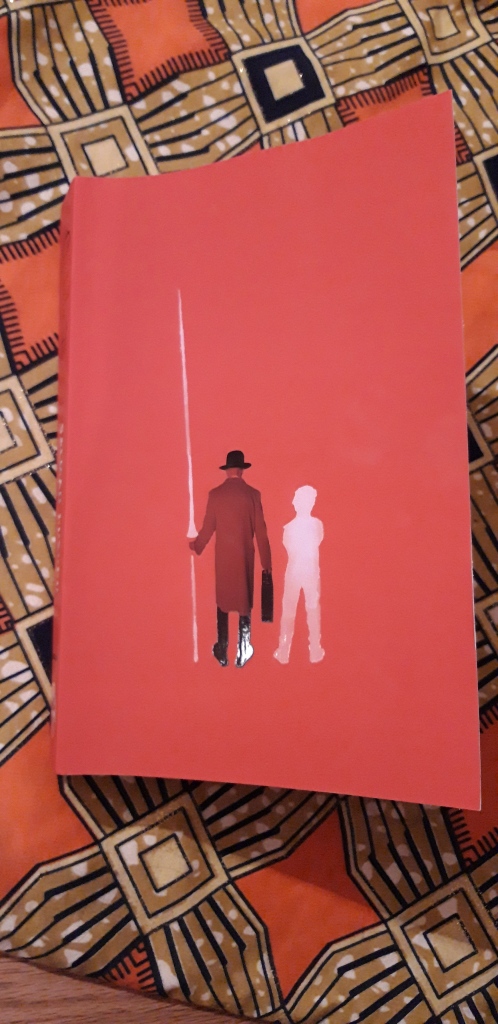
Rushdie is well-known for his use of magical realism, but in this novel I found it too brash, unlike the pared-back manipulation of the device in Téa Obreht’s latest novel Inland, for example. The book’s self-conscious post-modernism, with its layered plots and narratives, and stories within stories, means the reader is kept from being drawn into the world(s) that Rushdie has created. The book isn’t designed to be immersive, and (Don Quixote-style) you can never forget that you are reading a work of fiction. It felt as though Rushdie wanted to show off, more than entertain; he’s a taker not a giver.
But perhaps this is unfair. There are also many plus points in this novel. Rushdie is not short of imagination, which is a boon, and if you’re prepared to go along for the ride, this book is no doubt wildly entertaining. Rushdie adeptly tears apart the bizarre modern nature of reality, where what is shown to us via screens can seem more real than reality, but simultaneously strangely distancing. He asks important questions about belonging and the meaning of truth, and provides a damning study of the brainless racism that is still endemic and increasingly apparent in countries like the USA and the UK. But … I found it overlong and way too in your face – sorry.




 Imogen is Reading and Watching the World: On Books, Film, Art & More
