I'm a UK-based editor for a major publisher. I'm making it my off-duty duty to experience FIVE books, FIVE films, art, TV, music and food from every country in the world (where feasible). See drop down menus for my progress.
Shadow of the Crescent Moon is the debut novel of Pakistani writer Fatima Bhutto. The novel, published in 2013, is set primarily in the real life town of Mir Ali, a north-western Pakistani town close to the Afghan border, and follows the stories of five young people – three brothers, and two young women important to them – in the post-2001 environment, amid the controversial US military action in the region and the impact of the Taliban.
Oldest brother Aman Erum is an aspirational young man, a budding entrepreneur, recently returned to Mira Lee after seizing the opportunity to study a business studies degree in the USA. The middle brother, Sikandar, is a hospital doctor, whose wife Mina seems to have been unhinged by grief after the death of their young son in a Taliban attack. Finally, youngest brother Hayat is a radical insurgent, as is the beautiful Samara, who also has history as the oldest brother’s long-distance girlfriend.
All are gravely affected by the influence of political Islam, and by the environment of violence and instability. The book’s focus is the events of a single morning, which culminate in act of betrayal, one that can be interpreted in at least two ways.
Bhutto is no stranger to politics and no stranger to violent loss. Her father was the murdered left-wing politician/militant Murtaza Bhutto, her aunt was the assassinated former Pakistani Prime Minister Benazir Bhutto and her grandfather was the Pakistani Prime Minister Zulfikar Ali Bhutto, who was sentenced to death in 1979.
The strengths of the book are its insights into the lives, difficulties and dilemmas of ordinary people living in complicated and often devastating times. It is also adept at highlighting the reasons why young people might be drawn to radical Islam and acts that can often seem incomprehensible, even mad, from a Western viewpoint.
However, the writing itself was not as accomplished: I found there was too much exposition and a distinct lack of nuance, compared with another Pakistani writer that I adore, Kamila Shamsie. Also, although it was essentially a book that unfolds over the space of a single morning, there was so much backstory and flitting around in time that the narrative device simply didn’t work.
If you’re a fan of hot actor Riz Ahmed, by the way, it’s worth noting that he reads the audiobook version of the novel.
Kehlmann has written across several genres, all with aplomb, with his work encompassing horror and short story and more besides. Shortlisted for the International Booker in 2020, Tyll (published in German in 2017) is a playful work of historical fiction, taking in mysticism, folk tales and the Thirty Years War, which was waged over the Holy Roman Empire in 1618-48. It had sold more than 600,000 copies in Germany by the time of its publication in English in early 2020, and is due to appear as a Netflix TV series.
Set in early 17th century Europe, the novel first provides an origin story for the semi-mythological character of Tyll, a folkloric trickster, part outlaw, part jester, who refuses to give into fate. It skips around in time in later chapters, with a large chunk of the narrative focusing on the multilingual Winter Queen, Elizabeth Stuart, the daughter of King James of England and Scotland, and her husband, Frederick, the Bohemian Winter King.
Elizabeth (Liz) is a fan of the theatre, but is not taken with the cultural offerings of her husband’s court:
“it was a language that sounded like someone struggling not to choke, like a cow having a coughing fit, like a man with beer coming out of his noise. What was a poet supposed to do with this language?”
The book, though evidently expertly researched, does not get bogged down in historical detail, wearing its erudition lightly. While intermittently emotionally affecting, the writing also humorously demonstrates the ridiculousness of monarchical hierarchies and court protocol.
I found myself turning to Wikipedia for context at times, although it wasn’t the full Wolf Hall experience (I think I spent as long on Wikipedia as on Wolf Hall while reading that novel). Tyll reminded me more of Rose Tremain’s Restoration or Music and Silence, in its lightness of touch, sly humour and focus on the trials and tribulations of European monarchs.
Dinner at the Homesick Restaurant was published in 1982, and I must have read it before, probably in my twenties when I lived in North London and didn’t have much money for books. I often made a hungover trip to Wood Green library to choose books on a Saturday afternoon, and remember the lurch of excitement on spotting an Anne Tyler novel that I hadn’t already read. By the end of the 1990s I had read pretty much everything Anne Tyler had written, and I’ve read most of her work since.
Assuming I have read the book before, I remembered nothing of it, although the character of Ezra, the novel’s middle child, seemed faintly familiar, and he’s someone who it is very easy to warm to (unlike his more handsome, charming but unfeeling older brother Cody). I found that the novel took a while to hook me in, but I finished it feeling genuinely awestruck at Anne Tyler’s ability to conjure up a whole cast of such nuanced, flawed but sympathetic characters.
The novel opens in the 1970s in Tyler’s eternal setting, the city of Baltimore, where Pearl, a sick old woman now, is reflecting upon the past. Married to spivvy salesman Beck, she was abandoned in 1944 and left to bring up their three children single-handedly. Self-reliant and proud – and exhausted and bitter – she manages as best she can with the juggle of working in a local grocery store and parenting, while trying to keep up appearances, and maintaining the fiction that her husband is simply working away and will one day return.
Having been initially introduced to children Jenny, Ezra and Cody from Pearl’s perspective, it is a shock to see events reinterpreted from the children’s own points of view, in turn, in later chapters. We understand that Pearl has often been an angry mother, inclined to lashing out both physically and verbally. What parent can’t relate to having responded unfairly to their children at one time or another, especially at a time of deep familial crisis, but Pearl’s words and actions can be desperately cruel, and her tongue particularly harsh.
Jenny, Ezra and Cody all fail in various ways to fulfil Pearl’s dreams for them, although professionally they flourish, really. This is not a perfect family by any measure, but its members are bound together somehow by invisible ties, even when individual members might be absent, disappointing or neglectful. Once grown up, dreamy restaurateur Ezra, itinerant efficiency expert Cody and overworked, domestically chaotic paediatrician Jenny all also make devastating, hurtful decisions at times and weather many storms. That is the book’s great strength really: that we see all its main characters at their worst, and yet retain sympathy for each of them.
Overall then I really enjoyed this very humane novel from a writer who is expert on the profundities of family life. It’s a warm-hearted testament to human resilience, and I think it might be my favourite Anne Tyler novel – though I’ll need to go back and re-read her whole back catalogue now (as Liz is doing) to know for sure. And, as a last-minute aside, I could really relate to Ezra’s desperate wish for a family dinner that doesn’t end in recriminations or arguments – how many times have I sat down with my three children and watched a lovely meal descend into a row!
"In the long ago beginning the world was unmapped.
It was nothing really – just a shrug of Jah
something he hadn’t thought all the way through.”
I’ve pledged to read and review 20 books for the blog between the beginning of June and the beginning of September (my #20booksofsummer reading challenge – the brainchild of Cathy at 746books), and to speed things along a little – while broadening my horizons – I swapped the book that I originally had in mind for this slender poetry collection by Jamaican-born poet and essayist Kei Miller, The Cartographer Tries to Map a Way to Zion. The book won the prestigious Forward Prize for Best Collection in 2014.
The title, which I love, already conjures up (“Tries“) the sense that the cartographer’s task may not be an easy one. The collection presents, often playfully, a debate between a cartographer, armed with his trusty scientific methods of delineating, controlling and mapping place, who comes up against the “rastaman’s” very different understanding of place, and his patient insistence that what is not plotted on any map can sometimes be as important as what is.
"The rastaman thinks, draw me a map of what you see
then I will draw a map of what you never see
and guess me whose map will be bigger than whose?
Guess me whose map will tell the larger truth?"
Miller demonstrates an affinity both with the cartographer and the rastaman, and acknowledges the duality that is present in our identities, and how easy it can be to make inaccurate assumptions about other people based on stereotyped beliefs about those identities. Miller has also indicated that in this work he hoped to show how it is wholly possible for two truths to co-exist independently of each other. But he does this with a sense of humour, not through some kind of turgid pontification in verse:
"But the cartographer, it is true,
dismisses too easily the rastaman's view,
has never read his provocative dissertation -
'Kepture Land' as Identity Reclamation
in Postcolonial Jamaica. Hell!
the cartographer did not even know
the rastaman had a PhD (from Glasgow
no less) in which, amongst other things, he cites
Sylvia Wynter's most cryptic essay: On How
We Mistook the Map for the Territory,
and Reimprisoned Ourselves in
An Unbearable Wrongness of Being..."
The collection contains evocative reflections on Jamaica, including the natural life of the island, a celebration of Jamaican Patois and an acknowledgement of a bloody colonial past (including the coming as a settler of the man reputed to be the island’s first serial killer, Scottish-born doctor Lewis Hutchinson, who killed at random and purely for sport).
There are also moving, loosely linked poems on the death of the poet’s mother (My Mother’s Atlas of Dolls), and in memory of a dearly loved friend. There is more humour, too, in poems such as When Considering the Long, Long Journey of 28,000 Rubber Ducks, which references the loss of a large cargo of bath toys in 1992 (“to them who scorned the limits of bathtubs, / refused to join a chorus of rub-a-dub;“), which have since been spotted at a wide variety of locations worldwide, and have consequently come to be monitored by scientists in order to inform their understanding of global currents.
I don’t often read poetry, as I have to slow right down and I struggle with that, finding myself skipping through the text, looking, I suppose for the characters! the plot!. But I had this book sitting in a pile from the library, and really enjoyed reading something totally outside my comfort zone.
It’s been a challenging month, with my daughter still recovering at home from extensive orthopaedic surgery, and reluctantly doing some home schooling from the sofa. We’ve been sharing a sofa bed downstairs for two months while she needs care in the night, and at 14 she could really do without her mum sharing a bedroom with her!
Anyway, all that, combined with the usual pressures of work and so on, mean that I have to snatch time to read. I’ve read and reviewed five of my #20booksofsummer: Olga Ravn’s The Employees, Deborah Levy’s Real Estate, Annabel Lyon’s Consent, Priestdaddy by Patricia Lockwood and Arundhati Roy’s The God of Small Things, which had been on my TBR list for more than 20 years!!! I enjoyed them all, but especially the Levy, with Consent coming second.
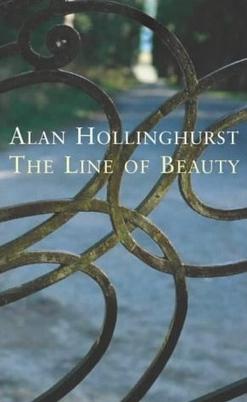
Aside from selections from my carefully curated 20booksofsummer, I’ve gone off-list by reading Alan Hollinghurst’s The Line of Beauty, which is a beautiful book, and which I absolutely loved. A pitch-perfect pastiche of 80s London, examining the affairs and ambitions of Nick Guest, who is openly gay, somewhat hedonistic, intermittently serious (with an academic interest in Henry James), and desperately social climbing, during the decade that brought the devastation of HIV/AIDS to a generation of young men. Nick’s ingratiatingly close relationship with the glamorous, posh family of his handsome Oxford friend Toby (Tobias) Fedden, and his affair with another former student acquaintance, the gorgeous and closeted Lebanese millionaire Wani Ouradi, form the core of the novel. The story also includes some very funny scenes referencing Margaret ‘The Lady’ Thatcher, with whom patriarch and positively salivating Tory MP Gerald Fedden is captivated. The line of beauty of the title can be read as referring both to the copious lines of coke that are chopped out on various surfaces throughout the novel, and to the architectural ogee, a sinuous line that emulates the curve of a buttock or a muscled back: Nick is a man who has a “love of the world that was shockingly unconditional”, and his head is turned as much by a beautiful work of art as by a sexy young man. Carefully plotted and wonderfully evocative, I absolutely loved this stunningly written book, which was perfect in every way. The Line of Beauty won the Booker Prize in 2004.
I also finished reading Dave Eggers’ 2013 novel The Circle, which is a damning dystopian critique of the perils of social media and of an ever-more-closely connected society and workplace. The story was a bit clunky in places, but the message was powerful and thought-provoking.
Finally I listened to a clunking audiobook of Louise Penny’s Still Life, a crime novel that I wished I hadn’t bothered with, and read Jane Harper’s crime thriller The Dry, which was much better.
TVwise, I watched Bo Burnham’s Inside on Netflix, which was a warped piece of genius, a one-man musical comedy show written and performed during lockdown, which made me laugh uncomfortably and also worry about Burnham’s mental health – and wish I hadn’t watched it with my two teens.
The God of Small Things is one of those books that everyone reading this will have heard of, but I don’t suppose everyone will have read. It won the Booker Prize in 1997 and rapidly became the biggest-selling work of Indian fiction by a non-expat writer. Arundhati Roy steered clear of fiction after writing her prize-winning novel, focusing on her political writing, although a second novel was published in 2017, some 20 years after her first.
The story, set in the southern Indian state of Kerala, is concerned with the Ipe family, focusing in particular on disgraced adult daughter Ammu and her twin children. Ammu has returned to her family home in the small town of Ayemenem after divorcing her alcoholic husband, but lives miserably there, filled with “The infinite tenderness of motherhood and the reckless rage of a suicide bomber“, while her brother Chacko jokes that “What’s yours is mine and what’s mine is also mine“.
A mutual attraction arises between Ammu and the lower-caste, ‘untouchable’ Velutha, a carpenter who is employed as a servant by the family, and whose father Vellya Paapen is a product of the ‘Crawling Backwards Days’. A relationship between the two is unthinkable to older members of the Ipe family. Meanwhile, Chacko, also divorced from his non-traditional British wife, satisfies his ‘men’s needs’ with women employed at his factory, Paradise Pickles and Preserves, without reproach.
The novel opens with the tragic death of a child, Chacko’s British-born daughter Sophie, who has arrived in India for a visit. But it isn’t a who-done-it. It’s a family saga of sorts, with a labyrinthine structure, which seems to seek to replicate the spiralling structure of (traumatic) memory. The novel opens at the end, really, and properly begins in the middle. Set in lush Kerala, the prose too is expansive, even overblown, and lyrical. Roy has said that it was important to her that in her novel the notion of family was anything but a place of safety, while the febrile political environment intrudes throughout, with the restrictive confines of the caste system, which determines who is allowed to love who.
“It all began when Sophie Mol came to Ayemenem. Perhaps it’s true that things can change in a day. That a few dozen hours can affect the outcome of whole lifetimes … Equally it could be argued that it actually began thousands of years ago … in the days when the Love Laws were made. The laws that lay down who should be loved, and how. And how much.”
Events in the novel are often presented from the perspective of the twins, the boy Estha and the girl Rahel, and dual, convoluted timeframes cover a period of a few days in December 1969, when the children are seven, and a later period when they are adults, again living in Kerala after a period of exile, in the early 1990s.
The prose style is arch and busy, a bit like early Zadie Smith, which I didn’t love, but Roy’s voice is nevertheless very distinctive, and the style successfully experimental. The ending when it plays out is truly devastating, though we know its inevitability almost from the start. Its counterpoint is a moving love story, which has far-reaching consequences: for a while, to Ammu, Velutha is something close to a god. The outcomes for these character’s lives, we come to understand, represent merely a small element within a context of all-pervading historical forces, while we see how the consequences of what appear to be small things can change the course of lives. I didn’t love reading this book, but I did think it worked brilliantly at what it set out to do.
Priestdaddy is an acclaimed memoir by US writer Patricia Lockwood, who is currently on the Women’s Prize shortlist for her first novel, No-one Is Talking About This, and whose tweets come imbued with the aura of legend. This, her first book, was published in 2017, and has a particularly random cover in my edition (see end of post), published by Penguin.
The book itself is a rollicking memoir of superlative writing, full of snortingly funny moments, which was apparently “chosen 15 times as a book of the year” (by whom? dunno.). The narrative is based around her family, headed by a macho patriarch – her comic, laconic father, a Kentucky priest, who asserts his masculinity by assembling and reassembling guns in disconcertingly transparent underpants.
After leaving home to marry her boyfriend Jason, they return to live with Lockwood’s family for financial reasons, linked to Jason’s expensive health problems:
“The first glimpse I get of my father he’s spread out on a leather couch in a pair of tighty-whities, which reassures me that nothing significant in the Lockwood household has changed since my departure twelve years ago. “I know so much about him,” Jason whispers over my shoulder. “Every time I’m in a room with your father, I fell like I’m supposed to be sketching his thighs.” It’s true. My childhood was one long life-drawing class where Santa posed for us, stripped naked and loudly challenging us to add more detail to his jelly. … His default position was a kind of explicit lounge, with one leg up and the other extended, like the worse kind of Jazzercise stretch you could possibly imagine.”
As a pre-teen, Lockwood’s father sits his children down to watch The Exorcist:
“As the glow of tween possession began to warm my father’s face, he said, with every appearance of perfect happiness, “Now here’s what you need to know. This story is absolutely true, it happened right here, right in St Louis, and it will one day happen again. Maybe to one of you, or to one of your friends”. … My father chuckled with narrative satisfaction and rammed a handful of potato chips into his mouth. “Now get a load of this,” he said. “She’s about to pee on the carpet.” “
There are quotable lines on every page. However, a schoolfriend once devastatingly told me that I was ok “in small doses”, and the relentless pace of anecdote and colourful metaphor in this memoir means that I can finally relate to that 14-year-old bitchbag as this, too, I found best consumed in bite-size chunks before I became overwhelmed with exhaustion. It’s bouncy, like a toddler whacked out on gummy bears.
My 16-year-old came and plonked herself down next to me as I was reading a chapter entitled “The Cum Queens of Hyatt Place“, which actually details a hotel trip with Lockwood’s mother, during which she complained at length about the suspicious stains on the bedding. My foul-mouthed daughter, believing I was reading some kind of Penguin version of Pornhub, was driven to screech “What the actual fuck are you reading??” and scurry away in horror.
Lockwood’s writing has drawn parallels with legendary comic essayist David Sedaris, and I can’t not recommend this book, as Lockwood is undoubtedly hugely talented. The comedy is interjected with unexpected moments of emotional clarity and rawness, as well as enormous warmth. I did feel for Lockwood’s family though, as every inch of excruciating personal history seems to have been mined for Lockwood’s personal use. I hope it was worth it.
Consent, a 2020 novel by Canadian writer Annabel Lyon (best known for her short stories and historical fiction), and book no 3 of my #20booksofsummer, was a book club choice. A relatively short novel, at just over 200 pages, we picked it at random from the Women’s Prize longlist (or nearly at random – the first title out of the hat, How the One-Armed Sister Sweeps the House by Cherie Jones, was rejected outright, on the basis that it would be ‘depressing’). Anyway, as predicted, Consent wasn’t exactly a barrel of laughs either, but it is extremely good, and not at all the tiresome dissection of issues around #metoo that I had feared from the title. Consent was also longlisted for Canada’s prestigious Giller Prize.
The narrative is focused around two sets of sisters whose narratives eventually intertwine, but despite this description it’s very much literary fiction rather than an airport novel (remember airports?). Saskia and Jenny are identical twins, both beautiful, but very different in character: while Saskia is studious and clean-living, Jenny is stylish, outgoing and hedonistic, with unspecified, longstanding mental health problems that make her impulsive in a way that can be both captivating and dangerous.
Sara and Mattie are different. While Sara is bright, cynical (perhaps through necessity) and devoted to high-end fashion, couture and cosmetics, her younger sister Mattie has an intellectual disability, and a loving, trusting, sunny-natured character (like a stereotype of someone with Down’s Syndrome).
Both Saskia and Sara find themselves making devastating decisions affecting their sisters’ futures, and find their own lives dictated by unhealthy compulsions and mental distress. The story is compulsive, and the writing often heady in evoking an atmosphere of pampered indulgence and lush luxury goods, as well as emotional rawness and grief. Minor niggles were that it is occasionally a little overwritten for my tastes, while the dialogue can sound unnatural at times.
The pace, never slow, picks up as the narrative moves along, and I could hardly put the book down. Despite finding the overall reading experience hugely enjoyable, I felt that this emotionally intelligent tale of guilt, family responsibility, vulnerability and addiction was let down by its bizarre ending, the tone of which jarred, and which pushed the bounds of plausibility.
I like the neat summary of this book in The Guardian‘s online bookshop: “A smart, mature writer’s novel about sex and power in the modern world – as if Deborah Levy wrote Cat Person.” I wish I’d come up with that, though it is a bit reductive, and there’s not all that much sex.
Do note that the book’s inside cover blurb, bizarrely, contains spoilers in the edition that I read (published by Atlantic Books), so I wouldn’t recommend reading that all the way through. I avoid newspaper reviews, but it’s a bit much when you have to avoid the book cover too!
I’d never heard of global music diva Angélique Kidjo – not until last week, I thought. But then, in a feat of gormlessness, I realised I’d seen her perform live in London, just two years ago. It’s not even as though I’ve been to vast amounts of concerts in the last 20 years – I’d say I’ve been to about … four, compared with countless, or at least not currently countable, such events in the 10 years before that. I even snapped a bad, grainy pic of her together with Philip Glass, which heads up this post.
The event in question was a performance in London of the Bowie Symphonies, three works by Glass, inspired by Bowie’s late 1970s ‘Berlin Trilogy’ of post-coke addiction albums: the experimental Low, Heroes and the poppier and crappier Lodger. The final symphony was being performed for the first time. Unfortunately, this new, third part was a bit rubbish, not helped by Kidjo, who intoned Bowie lyrics weirdly (bad weird) to something of a discordant (bad discordant – I know this is Philip Glass we’re talking about here) mess. However, Kidjo is best not judged on the basis of that performance.
Kidjo’s native Benin is a small West African state, which sits between Togo and Nigeria, and is famed for its drumming. Conflict in Benin led her to move to Paris in her early 20s, where she studied music and soon met Jean Hebrail, a musician and producer. They married in 1987, and much of her music has been composed with him.
Kidjo, now 60, has already had a long career, and last week released her 14th album, Mother Nature. She has a distinctive, strong voice, and often utilises Benin’s traditional Zilin vocal technique, described as a blues-like technique originating in the Fon heartland of central Benin.
Her work is hugely eclectic and impossible to pigeonhole, partly because she is a highly collaborative artist, and partly because she has produced work across such a wide variety of musical genres. She has won a fistful of Grammy’s, the most recent in 2020, for an album based on the work of the Cuban “Queen of Salsa” Celia Cruz, whose music Kidjo reinterpreted with an Afrobeat spin.
As well as working with Glass on earlier pieces, based on traditional Yoruba songs, she has also covered the African-influenced Talking Heads album Remain in Light, including the wonderful Once in a Lifetime (“you may find yourself in a beautiful house, with a beautiful wife, and you may ask yourself, how did I get here?“), Bob Dylan’s Lay Lady Lay, the Rolling Stones’ Give me Shelter (accompanied by Joss Stone) and Bob Marley’s Redemption Song. But she’s also recorded a song based on Ravel’s Bolero, performed with the Luxembourg Philharmonic, and dueted with Peter Gabriel and Ziggy Marley, while on her new, environmentally campaigning album, has collaborated with Zambian rapper Sampa the Great and Nigerian Afropop singer Yemi Alade, as well as the man whose name is forever synonymous with tantric sex, Sting.
Deborah Levy wears her erudition lightly. Her trilogy of “living autobiography”, published since 2013, is page-turning stuff, which I’ve enjoyed more than her fiction. Reading these works of almost-memoir makes me feel as though I have been taken into her confidence, and her prose seems effortless, though I know it can’t possibly have been.
Nominally this just-published, third work in the series, as the title, Real Estate, suggests, deals with property, whether imagined or truly inhabited. She discusses the family home in which she lived with her daughters’ father, her current crumbling London flat, and her two writing ‘sheds’, where she spends much of her working time. She clears her deceased step-mother’s apartment and muses on how the intimacy of engaging with her possessions means she feels she comes to know her almost better after death than during her lifetime. At 59, she also dreams of an idealised, permanent home (instead of a ‘perch’), a grand old house near the sea, where she could swim, with a pomegranate tree, mosaics, fountains and circular staircases. The book’s wider themes cover the things that we own, the things that we choose and that create meaning for us, the things we leave behind and, ultimately, what makes for a meaningful life or for a life well-lived.
The narrator is “myself but not quite myself“, and “the weight of living has been heavier in my life than it is in my books“. Often questioning and sometimes angrily confronting, Levy is nevertheless attractive company. Judging by Michèle Roberts’ memoir of writer’s block, Negative Capability, Levy is less grouchy than the irascible Roberts, who seems to inhabit a similar cosmopolitan milieu. Actually, grouchiness is not a problem and is oft-warranted, but Levy’s writing is imbued with humour and a sharp sense of the absurd even when, or especially when, delivering a devastating take-down. I did find myself wondering whether her close friends and acquaintances object to what are presumably at least semi-factual interrogations of their personal life: for example, Levy’s “male best friend” comes across as a particular creep.
Her evocative prose conjures up lush smells, delicious tastes and the sense of touch through her descriptions of food, soap, ink, jewellery, furnishings…. “sometimes I would sprinkle sea salt on a wedge of sour green tomato and dip it into the peppery emerald olive oil“. She evidently loves lovely things (she revels in silk sheets, north African robes and beautiful fountain pens) and carries around a nebulous mental inventory of her possessions. Self-possessed, she is at home in homes all over the world, and would presumably count as one of ex-UK PM Theresa May’s ‘citizens of nowhere’.
Born in South Africa, Levy has lived in the UK since middle childhood, but with her father in Cape Town, a stepmother who was based in New York, and with work and friends in India, France and Germany, her life sounds envy-inducingly rich in experience. She is also evidently very good at drawing people out of themselves: every time she leaves the house she seems to have an intriguing or invigorating interaction, even if the subject matter is not necessarily to her liking (one older man in Paris tells her about his revived sex life, referring throughout to his penis as ‘the jaguar’). She has cool friends who do yogic handstands while discussing Bergman, and manages to make this sound normal, and even aspirational, rather than pretentious and a bit irritating.
The book references sources as wide-ranging as Rebecca West, James Baldwin, Georgia O’Keeffe, Katherine Mansfield (“would you not like to try all sorts of lives, one is so very small“), Audre Lorde, Simone de Beauvoir, Leonora Carrington and Walter Benjamin (“the work of memory collapses time“). As a result it is eminently quotable; for example, Levy tells us that Jane Birkin’s mother is understood to have said to her daughter: “When you’ve got nothing else left … Get into silk underwear and start reading Proust“.
My reading list is (even) longer after reading this book – starting with Marguerite Duras, who is an enduring favourite of hers. Real Estate is also inspiring with respect to gaining success later in life, and provides insights into the writing life, with asides on issues as diverse as conformity, the co-existence of power with vulnerability, and translation (“to be translated was like living another life in another body in France, Ukraine, Sweden, Vietnam…”). Levy seems to notice more than most of us do: a felicitous key, hanging from a tree; some beautiful carved fairground horses in an Afghan carpet shop, which turn out to be worth a small fortune – there are rich observations on every page.
She describes Rosetta Tharpe, “the godmother of rock’n’roll” as her “role model for middle age, ever since I saw a film of her performing when she was forty-nine in a railway station in Manchester“, but for me Levy seems an excellent role model for late middle age herself, and has inspired an enduring girlcrush (along with Elif Shafak, so she’s in good company).