Kiki’s Delivery Service, film by Hayao Miyazaki (Japan – for Japanuary 2022)

This is a slightly revised, short review of Studio’s Ghibli’s 1989 film Kiki’s Delivery Service, which I first posted in 2020. Films by Studio Ghibli are available for streaming on Netflix in the UK.

My children have grown up with Studio Ghibli animations such as the iconic My Neighbour Totoro, Ponyo and The Cat Returns, and retain huge amounts of affection for their hyper-realistic, surreal and fantastical animations, even in their teens. And why wouldn’t they? I love these movies too.

Kiki’s Delivery Service is a charming take on the coming of age movie. At the age of 13, junior witches have to leave their families and make their own way in the world for a year (like a gap year!). So in this beautifully detailed animated feature, Kiki sets off on her herbologist mother’s broomstick to seek her fortune, with only her talking pet cat/familiar Jiji for company.

After an eventful journey, Kiki ends up in a city that looks very much like some kind of European hybrid utopia, a bit like a coastal Paris. She finds lodgings in a dusty but soon cosy cottage near the sea, and quickly finds a job in a local bakery, while she also develops a sideline as a delivery girl, using her broomstick as her delivery vehicle.

She meets various characters along the way, including a young aviation-mad boy, Tombo, who is impressed by Kiki’s aerial skills on the broomstick. As she bonds more and more with her everyday acquaintances, her magical powers seem to wain, and she has to find new purpose and confidence in her life in order to overcome her block.

Tombo invents a bizarre flying machine, a bike with some kind of propeller attachment, and mild peril ensues. As usual with Studio Ghibli films, the storyline is appealingly strange, but its own breed of internal logic means everything pans out satisfactorily in the end. All in all, this is a really delightful movie for all ages.

Anime may depict fictional worlds, but I nonetheless believe that at its core it must have a certain realism. Even if the world depicted is a lie, the trick is to make it seem as real as possible. Stated another way, the animator must fabricate a world that seems so real, viewers will think the world depicted might possibly exist.” – Hayao Miyazaki

The Book of Tea by Kakuzo Okakura (1863-1913, Japan – for Japanuary 2022)

Tea began as a medicine and grew into a beverage

I’m dedicating January 2022 to Japanese culture (woo hoo, after ‘Turkey month’, it’s ‘Japanuary’ – and I’m even trying to learn some Japanese). I’m also a self-confessed tea monster, and after reading the opening line above I was intrigued by the concept of an entire book dedicated to the topic. How?!

The Book of Tea is a short meditation on tea, published in 1906 and comprising seven chapters and 82 pages in my library-sourced edition. Its Japanese author wrote the text in English, and it is aimed squarely at informing the Western reader of the history of tea’s popularity in China and Japan, and of the philosophy and ritual around the Zen-inspired Japanese tea ceremony.

The long isolation of Japan from the rest of the world, so conducive to introspection, has been highly favourable to the development of teaism. Our home and habits, costume and cuisine, porcelain, lacquer, painting – our very literature – all have been subject to its influence. No student of Japanese culture could ever ignore its presence … Our peasants have learned to arrange flowers, our meanest labourer to offer his salutation to the rocks and waters. In our common parlance we speak of the man ‘with no tea’ in him, when he is insusceptible to the seriocomic interests of the personal drama. Again we stigmatise the untamed aesthete who, regardless of the mundane tragedy, runs riot in the springtide of emancipated emotions, as one ‘with too much tea’ in him.”

There are additional chapters on the design and layout of the tearoom (sukiya) itself, on art appreciation and on flowers, so its a guide to aesthetics, too. There is even a formal appreciation of the sound of the boiling kettle on its bed of carefully arranged pieces of iron.

A single picture or piece of art is placed inside the tearoom, and the author notes the strange practice of stuffing Western homes with pictures:

One cannot listen to different pieces of music at the same time, a real comprehension of the beautiful being possible only through concentration upon some central motive … To a Japanese, accustomed to simplicity of ornamentation and frequent change of decorative method, a Western interior permanently filled with a vast array of pictures, statuary, and bric-a-brac gives the impression of mere vulgar display of riches.

Even for me, in my South London terrace, a world away from a 19th century Japanese tea ceremony, there are ritualistic and meditative elements to tea-making and tea-drinking (and in 1946 George Orwell wrote a whole essay on making the perfect cup). The act of making tea and waiting for it to cool allows for a pause from work or general busy-ness and for a temporary release from the strictures of time and everyday pressures, like smoking a cigarette did when I did that (many moons ago).

Brilliantly, Kakuzo Okakura was director of the Tokyo Fine Art School, and would apparently arrive for work each day on a white stallion, dressed in a white robe (Okakura, not the horse).

As you can probably imagine, The Book of Tea doesn’t exactly race along, despite its length, but I must say it is extremely quotable.

Lu T’ung, a T’ang poet, wrote, ‘The first cup moistens my lips and throat, the second cup breaks my loneliness, the third cup searches my barren entrail but to find therein some five thousand volumes of odd ideographs. The fourth cup raises a slight perspiration – all the wrong of life passes away through my pores. At the fifth cup I am purified; the sixth cup calls me to the realms of immortals. The seventh cup – ah, but I could take no more! I only feel the breath of cool wind that rises in my sleeves’.”

End of Year Round-Up, Stats, Additions to the TBR and Plans for ‘Japanuary’

In 2021 I posted 86 times (less than last year), with reviews of culture from all over the world: television from France, Germany, Ireland, New Zealand, Poland, Sweden and Turkey; and Oscar-winning and -nominated films from Denmark and Romania, as well as films from Australia, Burkina Faso, Egypt, Kenya, Lesotho, Niger, South Korea, Thailand, Turkey and Tunisia.

I looked at and reviewed art from Albanian artist Anri Sala and Australian sculptor Ron Mueck, and more art from Bahrain, Botswana, Ghana and Turkey, as well as photography from Mali, and listened to and wrote about music and musicians from Ethiopia, Benin, Sweden and Turkey.

I reviewed this year’s Booker-winning novel, by South African author Damon Galgut, I discussed works of reportage from Belarus, Peru and Poland, poetry from Jamaica, and literature from Austria, Azerbaijan, Bangladesh, Chile, Denmark, the Dominican Republic, Germany, Grenada, Iceland, India, Indonesia, Pakistan, Russia, Senegal, Syria, Turkey and Zimbabwe, as well as the usual suspects: the UK, the USA and Canada. In total I’ve read 97 books in 2021, just under my goal of 100.

I was proud to have accurately predicted four of the novels on the Booker longlist, but then got swamped with work and didn’t have time to read enough of it in time to make an informed attempt to predict the shortlist.


In terms of my blog stats, my most-read post was my review of Abdulrazak Gurnah’s novel Paradise (Tanzania), which I wrote in 2020. Its popularity soared when Gurnah won the Nobel Prize for Literature 2021 for his “for his uncompromising and compassionate penetration of the effects of colonialism and the fates of the refugee in the gulf between cultures and continents”, to total over 500 views in 2021.

My other most popular posts were my review of a Jamaican short story collection, Mint Tea and Other Stories by Christina Craig (not sure why – maybe people searching for offers on tea go there by mistake!!), my review of Paolo Sorrentino’s 2013 film The Great Beauty (La Grande Bellezza), my review of the brilliant French TV series Call My Agent (Dix Pour Cent) and my review of much-lauded Albanian author Ismail Kadare’s books Broken April and The Doll, which all got more than 100 views each.


Between late November and late December I focused on work from Turkey, reading and reviewing five books by Turkish authors, and watching Turkish TV and film, going to an exhibition of Turkish art, listening to a variety of music from Turkey and even cooking up a storm with a table full of vegetarian Turkish meze. It was fun and informative immersing myself in a country like that, and I will be repeating the experience in January with Japan (‘Japanuary’), February with Afghanistan, March with Greece and April with Portugal.


December additions to the TBR:

I bought a few Kindle books for 99p, which I must try not to forget about:

  1. Matrix by Lauren Groff (a novel featured on many ‘best of 2021’ lists).
  2. Sankofa by Nigerian author Chibundu Onuzo.
  3. Mum, What’s Wrong with You by Lorraine Candy (on parenting teen girls).
  4. The Power and the Glory by Graham Greene (I like Greene’s ‘Catholic’ novels more than his capers, and haven’t read this one).
  5. Cerebral Palsy: A Story: Finding the Calm After the Storm by Ilana Estelle (a memoir of a woman born with unacknowledged CP – I’m always interested in work by disabled writers as my middle child, my 15-year-old daughter, has CP, and her everyday challenges and achievements and my relentless trauma around her birth – and her near death – shape our family’s lives to a lesser or greater degree).

I’ve also bought three brand new physical books:

  1. Polly Barton’s Fifty Sounds, a memoir of Japanese language-learning recently published by Fitzcarraldo Editions.
  2. Norwegian writer Jan Grue’s memoir I Live a Life Like Yours, just published in hardback in English by Pushkin Press and translated by B. L. Cook, and longlisted for this year’s Barbellion Prize for writers living with chronic illness or disability.
  3. A Japanese beginners coursebook to supplement my scrappy efforts on the DuoLingo app: a Complete Japanese Beginner to Intermediate Book by Helen Gilhooly.

Mustn’t forget the books I’ve received for Christmas:

  1. Eva Hoffman’s 2008 Lost in Translation: A Life in a New Language about being uprooted from her native Poland in 1959 at the age of 13, and building a new life in the USA and acquiring a new language, English.
  2. Three Summers by Greek author Margarita Liberaki, a coming of age tale recently published in English translation (translated by Karen Van Dyck) as part of the new Penguin European Writers series.
  3. Life Between Islands: Caribbean-British Art 1950s-Now published by Tate to accompany the current major exhibition on Caribbean art being held here in London at the moment, and which I hope to get to early in the new year.

And from the library, where you can always afford to go off-piste a bit:

  1. Spoon-Fed: Why Almost Everything We’ve Been Told About Food is Wrong by Tim Spector, genetic epidemiologist at Kings College London and the man behind the ZOE Covid App/Survey.
  2. Travelling While Black: Essays Inspired by a Life on the Move by Kenyan academic and writer Nanjala Nyabola – a collection of reflections on migration and identity from an African woman who is used to travelling widely.
  3. Wretchedness by Andrzej Tichy, longlisted for the International Booker, which I never quite got round to at that time.
  4. The Saga of Gosta Berling by Selma Lagerlof, which is a 19th century classic by a Nobel Prize winning writer.
  5. The Book of Tea by Kakuzo Okakura, another 19th century classic, from Japan, on the history and cultural significance of tea.

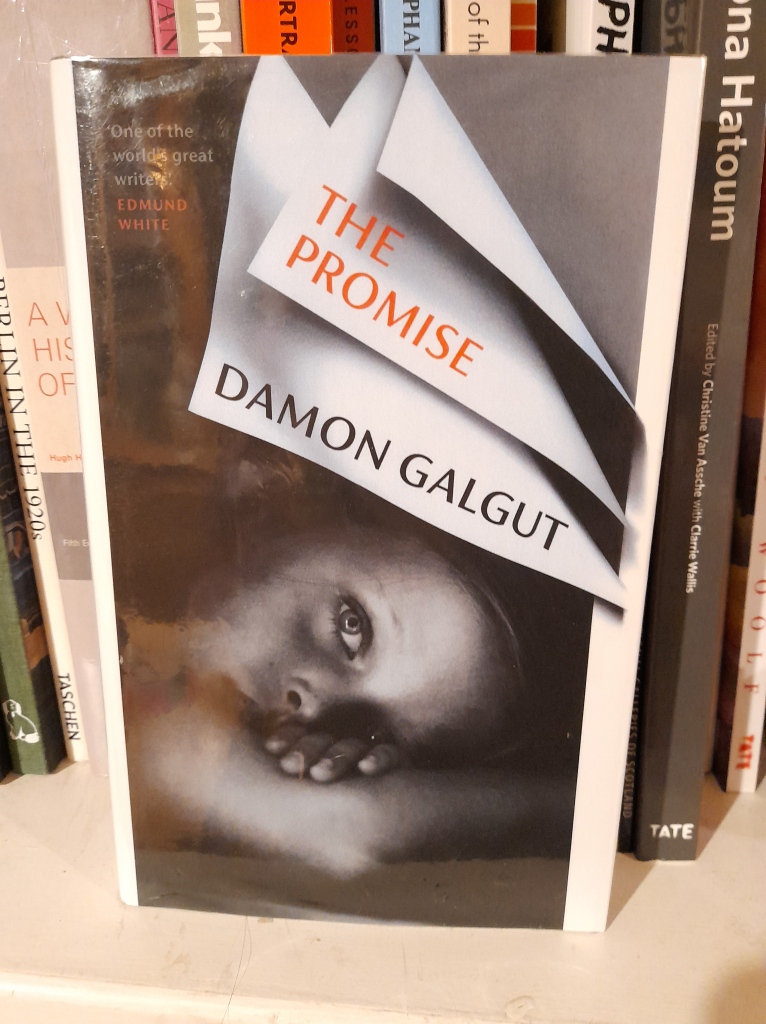
The Promise by Damon Galgut (South Africa)

Damon Galgut’s outstanding 2021 novel The Promise was, for me, a worthy winner of the Booker prize, and is definitely one of my top reads of 2021, though to describe the book as a ‘family saga’ – as many reviews have done – is reductive. The book rises way beyond the banal expectations that those two words might conjure up.

The book opens with the untimely death from cancer of Ma, 40-year-old Rachel, who leaves a husband, two adolescent daughters – inscrutable Amor and flighty Astrid – and a slightly older son, the impulsive and sensitive Anton (my favourite). All of these people are complex and flawed to a greater or lesser degree, but all feel like fully rounded, real people. And in the background is the quiet presence of Salome, the family’s black domestic servant, and an unfulfilled promise, made at Ma’s deathbed, of the right to her own home, her own property.

The narrative follows this wealthy, property- and land-rich white South African family and their declining fortunes over a period of about 30 years, covering the time immediately before and the decades immediately following the collapse of apartheid.

The novel is cleverly structured in four parts, each part based around a different funeral, which enables the narrative to leave the main characters frozen at one snapshot moment in time, before cutting forward chronologically to the next significant point of crisis and connection.

There are serious issues here, not least endemic racism, and a revolving backdrop of riots, Presidents and political trials, but the narrative bounces along with a sense of fatalistic glee. The book is never bland, predictable or slow: Galgut has a unique narrative voice, and this work is at once highly literary and grittily down-to-earth in its prose style, while the story confidently balances bleak humour and even some supernatural/magical realist elements without ever over-stretching patience or lapsing into solipsistic self-indulgence. And amid the merry-go-round of death and disappointment (I mean that’s real life, huh?) this an enormously enjoyable book.

I’ll finish with a quote taken from the first page of the book, for flavour:

“It hasn’t happened, not actually. And especially not to Ma, who will always, always be alive.

I’m sorry, Miss Starkey says again, covering her big teeth behind thin, pressed-together lips. Some of the other girls say Miss Starkey is a lesbian, but it’s hard to imagine her doing anything sexy with anyone. Or maybe she did once and has been permanently disgusted ever since. It’s a sorrow we all have to bear, she adds in a serious voice, while Tannie Marina trembles and dabs at her eyes with a tissue, though she has always looked down on Ma and doesn’t care at all that she’s dead, even if she isn’t.

A Turkish menu from ‘Ripe Figs’ by Yasmin Khan

To round off my few weeks of immersion in Turkish culture I prepared a delicious Turkish meze for my husband and me. I used the suggested Turkish meze menu from a great new cookbook, Ripe Figs by Yasmin Khan, which explores food and human stories from Turkey, Greece and Cyprus.

I should make it clear that I’m not a big fan of cooking, and am not about to start a food blog, but I do love food, and I found the recipes in the book hugely approachable and really delicious.

I prepared a garlicky aubergine salad, a white bean salad, courgette and feta fritters, a veggie-packed salad and spicy bulghur wheat in lettuce ‘cups’, and served it all with bread, olives and wine (French as I couldn’t find Turkish wine anywhere locally!). I’m not much of a food stylist, but the resulting meal was delicious, and I’m mostly veggie, so this selection of dishes suited me down to the ground.

It did take me a while to shop for all the ingredients, and then prepping the food took me about three hours, so I probably wouldn’t serve all these things together on a regular basis. However, I will definitely prep them again in combinations of two or three. The book is from the library, but is now firmly on my wish list for Christmas, as I know it’s one I’ll use again and again.

I Will Never See the World Again by Ahmet Altan (Turkey)

Turkish title Dünyayi bir Daha Görmeyeceğim

Translated by Yasemin Çongar

With a Foreword by Philippe Sands

Turkish writer Ahmet Altan was arrested in 2016, in the aftermath of the failed coup attempt against Turkish President Recep Tayyip Erdoğan. He was accused of treason following a brief appearance on television following the coup, and imprisoned. His subsequent short memoir, detailing his time in prison, has echoes of Burhan Sönmez’s ‘Istanbul Istanbul’ (which I reviewed earlier this month), in its depictions of both the brutal reality of Altan’s desperate situation and the way he is able to escape, to some degree, into a reality-adjacent realm:

“Viewed from outside, I was one old, white-bearded Ahmet Husrev Altan lying down in an airless, lightless iron cage.

But this was only the reality of those who locked me up. For myself, I had changed it.

I was the lieutenant happily eating cherries with a gun pointing at his heart. I was Borges telling the mugger to take his life. I was Caesar building walls around Alesia.”

In fact, I would have assumed that Borhan Sönmez had read this work first, and used is as an influence for his novel, were it not for the fact that Altan’s book was published later than the novel, in 2019. Of course, Sönmez has experienced imprisonment as a political prisoner too, so perhaps it is simply that his novel was very successful at recreating an experience that is, unfortunately, widely known among the Turkish literati.

However, I found the writing in this memoir more haunting than the novel (and at the same time very simply expressed), more moving and more evocative. I was driven to keep turning the pages as Altan communicates his reflections and experiences, however disturbing they might sometimes be.

There is a passage where Altan is pacing his cell, waiting for the verdict following a very dubious trial, at which the judges were visibly and audibly disengaged. Horrorstruck, he recalls that at a happily oblivious, earlier time he wrote a novel featuring a character in prison, nervously awaiting the result of his trial:

“Years ago, as I was wandering in that unmarked, enigmatic and hazy territory where literature touches life I had met my own destiny but failed to recognize it; I wrote thinking it belonged to someone else.”

He is sentenced to life imprisonment, without parole, after being found guilty of being, variously, a ‘religious putschist’ and a ‘Marxist terrorist’, and much of the memoir is written under the belief that he will die in prison.

Unexpectedly, there are some moments of levity or at least a sort of absurdist humour, such as when, locked-up with two devout Muslims (Altan is a non-believer), they are forced to come to some sort of accommodation of each other’s beliefs.

“The middle one was easily offended in matters of religion. Although I knew this, I sometimes couldn’t stop myself from teasing him like a teenager.

Then he would be cross and stop talking to me for precisely three days.

Because Prophet Muhammad said, ‘It is not permissible for a man to forsake his Muslim brother for more than three days…’ he would make peace at the end of the third day.”

However, when this pious man’s daughter, barely out of her teens, is imprisoned for four months, Ahmet prays with him to thank God for her release, in what is a really beautiful brief episode.

In a translator’s note we are told that Yasemin Çongar received the book in dribs and drabs from prison, on handwritten sheets, over a period of several months between November 2017 and May 2018. The resulting memoir was longlisted for the 2019 Baillie Gifford Prize (effectively the Booker prize for non-fiction).

I don’t know that it would be appropriate to say I ‘enjoyed’ this book, but I was certainly absolutely gripped by what is a smoothly translated, compelling and often gorgeously written piece of life writing. And I was delighted to learn that Altan was finally released from prison in April 2021, albeit after years of incarceration.

Turkish TV show Ethos (Bir Başkadır)

A Netflix original series

Coming down with a bout of COVID-19 gave me a perfect excuse to binge an entire Netflix series in the space of a weekend.

Turkish drama series are popular exports, particularly in Latin America, and also in Pakistan and elsewhere. Turkey comes second only to the USA in terms of global TV distribution – but little Turkish TV has made it onto UK and US screens.

I started out watching big budget Turkish supernatural thriller The Protector, but it was just too silly (not in a good way – it was big-budget implausible and hammy without being enjoyably camp). So I moved onto eight-parter Ethos or Bir Başkadır (2020), which had received a rave review in the BFI’s Sight & Sound.

Bir Başkadır literally seems to translate as something like It’s Something Else (generally with a positive rather than negative slant), which is perhaps a more meaningful title than the one chosen for the English version. The series is a Netflix original, with high production values and an emotionally intelligent script. Ethos is both written and directed by Berkun Oya, and I watched it with English subtitles (though I think there’s an option to watch a dubbed version).

The storyline is set largely in Istanbul and involves a group of people from very different economic and cultural backgrounds, whose lives overlap and intersect in unexpected ways. As a result of these connections and sometimes unlikely (but not totally credulity-stretching) encounters, the disparate characters are forced to confront their repressed emotions and challenge their prejudices in order to move on in their lives.

The main characters include Western-educated, middle-class psychologist Peri (Defne Kayalar) and her patient, Meryem (the very striking Öykü Karayel), an uneducated young woman who is deeply religious and covers her hair, and consults a local Hodja (a sort of teacher/wise man/scholar, played by Settar Tanriogen). Meryem is referred to Peri after suffering a number of fainting episodes.

Meryem is fascinated and intimidated by the lifestyle of the man she cleans for, Sinan, who lives in an ultra-modern, impersonal, high-rise city flat – and who, it turns out, is also sleeping with two of Peri’s acquaintances. In contrast, Meryem lives in a rural location outside the city in a simply furnished home, with her brother’s family.

Peri’s cosmopolitan, super-secular pre-conceptions mean that she vastly under-estimates Meryem, who is resourceful and resilient, even as she is also obfuscating and naive. It is Meryem who provides the emotional scaffolding that supports the family of her uptight, angry brother Yasin (Fatih Artman) and her beautiful sister-in-law Ruhiye (Funda Eryigit), who is deeply mentally unwell.

The characters are nuanced and involving, and the series is very accessible for viewers from non-Turkish-speaking countries and non-Muslim countries.

A Paris Review critic noted that she “could tell the dialogue in Ethos leaned heavily on the fanciful ‘gossip tense’ in Turkish (mish-mush) — a grammar used to describe anything that is only known allegedly, or secondhand … [revealing] the thickly layered social and psychological underpinnings of this grammar” — this then is that tense also spoken of by Orhan Pamuk in his book on Istanbul that I referred to earlier.

The lingering shots of grotty nightclub interiors, impersonal skyscrapers and family washing flapping in a country breeze, together with the retro closing credits that play archive footage of Turkish performers and TV shows from decades gone by also seem to capture that sense of hüzün or collective melancholy of which Pamuk writes.

Again we have that clash between east and west, patriarchal traditions and modernity, and secular life and a stricter adherence to Islam that I pretty much dismissed in an earlier post as clichéd, but which I see more and more is a cliché for a reason: these issues are deeply embedded at the heart of modern Turkey, now perhaps more than ever, with President Recep Tayyip Erdoğan’s ruling conservative Justice and Development Party, which attracts strong support from orthodox Muslims, having been in power since 2003.

Istanbul: Memories of a City by Orhan Pamuk (Turkey)

Translated by Maureen Freely

I set out intending to read the massive My Name is Red by Nobel Prize for literature winner Orhan Pamuk, but gave up on it 145 pages in. I know it has been raved over, and in my defence I gave it longer than most books that I’m not enjoying. However, I knew I couldn’t dedicate a month of reading to Turkish writers and not read any Pamuk.

On my shelves I found another of his books, Istanbul: Memories of a City, first published in 2003, and published in English in 2005 by Faber & Faber. I have no idea where this book came from. It’s clearly been bought secondhand, as it’s evidently been read before, and not by me. My daughter’s RDA riding centre raises extra money by selling off donated books for 50p each, and it’s possible I picked it up there at some point. Anyway, I’m glad I did.

I wasn’t particularly expecting to enjoy the book, given I’d found My Name is Red pretty tedious (sorry!). I’m a sucker for life writing and memoir though, and already in its first pages this book raised some interesting questions about identity and memory (Pamuk is a psychoanalyst’s delight!), as well as about the history and status of the city of Istanbul. Pamuk is very open to Western influence and culture, but remains strongly attached to Istanbul, the city of his birth, the city to which he has always returned, and which, for him, is also “a city of ruins and end-of-empire melancholy“.

Pamuk repeatedly uses the term hüzün to refer to this specifically Turkish form of collective melancholy, which, for Pamuk, in many ways came to define the culture of Istanbul after the collapse of the Ottoman Empire. Indeed, he dedicates an entire chapter to this concept.

The hüzün of Istanbul is not just the mood evoked by its music and its poetry; it is a way of looking at life that implicates us all, not only a spiritual state, but a state of mind that is ultimately as life affirming as it is negating.”

I am speaking of the evenings when the sun sets early; … of the covered women who stand at remote bus stops clutching plastic shopping bags and speaking to no one as they wait for the bus that never arrives; of the empty boathouses of the old Bosphorus villas; … of the broken seesaws in empty parks; …. of the cold reading rooms of libraries; of the street photographers; …”

The narrative is a something of a hodgepodge, partly a mosaic social history and in part a childhood memoir, but always interesting. When reflecting on his early childhood Pamuk notes that:

I feel compelled to add ‘or so I’ve been told’‘. In Turkish we have a special tense that allows us to distinguish hearsay from what we’ve seen with our own eyes; when we are relating dreams, fairy tales, or past events we could not have witnessed, we use this tense.”

Interspersed with his reflections and recollections are Sebaldian photographs of historic Istanbul and those taken from family albums.

There are bits of linguistic and historical miscellany and entertaining digressions on virtually every page:

I now present a random sampling of some of the most amusing advice, warnings, pearls of wisdom and invective I’ve culled from the hundreds of thousands of pages written by columnists of various persuasions over the past 130 years:

‘It has been suggested that to beautify the city, all horse-drawn carriage drivers should wear the same outfit; how chic it would be if this idea were to become a reaity.’ (1897)”.

The book was shortlisted for the Samuel Johnson prize in 2005 (now the Baillie Gifford prize for non-fiction) and I’d recommend it to anyone interested in life writing, literary non-fiction and European cultural history. I’ll wrap things up with a quote from Pamuk, which highlights his single-mindedness when writing (and his ability to compartmentalise!):

I thought I would write Memories of a City in six months, but it took me one year to complete. And I was working twelve hours a day, just reading and working. My life, because of so many things, was in crisis; I don’t want to go into those details: divorce, father dying, professional problems, problems with this, problems with that, everything was bad. I thought if I were to be weak I would have a depression. But every day I would wake up and have a cold shower and sit down and remember and write, always paying attention to the beauty of the book. Honestly, I may have hurt my mother, my family. My father was dead, but my mother is still alive. But I can’t care about that; I must care about the beauty of the book.”

Turkish music

Review no 193

In my quest to experience a variety of Turkish music I’ve been listening to a number of different artists. First up, Sezen Aksu, the “uncontested Queen of Turkish Pop”, a varied singer who has been performing for decades, and still, at the time of writing, has two albums in the Turkish top 40. I really like her track Sarı Odalar, although it’s far from her most recent, having been released in 2012. It does look though as if she’s been unable to resist the lure of a bit of dodgy plastic surgery.

Next came a classic by Özdemir Erdoğan, active since the 1960s, and still recording now, into his 80s. This track, Gurbet, is one of his most well-known songs, which was released in 1972 and has been used in countless Turkish movies. I just love it.

Omar Faruk Tekbilek is another artist with a long career, who weaves hypnotic, mesmeric, contemplative melodies, and who I like a lot. He’s a multi-instrumentalist, and has mastered many intriguing instruments including the ney (a sort of bamboo flute), the zurna (a double-reed oboe-thing) and the baglama (a long-necked flute).

I also listened to Ferdi Ozbegen, an appealingly (some may say appalingly) cheesy crooner.

I then played something a bit more up to date: an atmospheric indie-folk tune by Gaye Su Akyol, who seems to be channelling Freddie Mercury in Zandra Rhodes circa 1974.

I also coaxed Spotify into churning out catchy, upbeat pop by Yalın, danceable saxophonetastic jazz by İlhan Erşahin, instrumental pieces by the Taksim Trio and rich, melodramatic belters by Sıla (who is also hugely popular, with three albums in the top 40).

Then I listened to a somewhat dodgy cover of Bob Dylan’s One More Cup of Coffee by ex-opera singer Sertab Erener, continuing a loose theme of tracking down Bob Dylan covers from around the world that I first started in my overview review of the work of Beninese singer-songwriter Angélique Kidjo.

Top of the album charts in Turkey, however, according to Apple, is currently Adele’s 30. There’s no getting away from her. And, bizarrely, number 3 in the album charts was the soundtrack to the 1997 film Titanic (“paint me like one of your French girls!”). There’s no accounting for taste. But also, does anyone actually use iTunes anymore, and could this unlikely statistic be a bit misleading?

So I moved onto Spotify, and found some online info for the most listened to genres, artists and songs in 2020 (although not yet 2021). Rap is popular: rapper Ezhel was the most listened-to artist in Turkey in 2020. It was interesting to listen to rap with a distinctly Turkish feel, and with a video featuring some textiles very evocative of Turkey:

And although the afore-mentioned Sezen Aksu was second-placed, rappers also made up the remainder of the top 5, with Murda, Sagopa Kajmer and Patron being among the most listened-to Turkish artists on Spotify.

Among the most listened-to bands in 2020 were Indie rockers Yüzyüzeyken Konuşuruz, Dolu Kadehi Ters Tut, Duman, Pinhâni and Adamlar.

My whizz through Turkish musical culture can hardly be described as comprehensive, but it did give me a least a brief introduction to the wide variety of music popular in Turkey, aside from foreign imports (like the ubiquitous Adele).

I’m rounding things off here with a bit of 1960s Turkish psychedelia, with Erkut Taçkın and Okan Dinçer ve Kontrastları and Özlem (1967).

‘Istanbul Istanbul: A Novel’ by Burhan Sönmez (Turkey)

Translated by Ümit Hussein

Burhan Sönmez is a Kurdish novelist and lawyer from Turkey who is a winner of the equivalent there of the Booker Prize, and he is the recently elected President of PEN International. Notably, he was seriously injured after being assaulted by Turkish police in 1996, and received treatment in the UK, where he lived in exile for several years. He now lives and works in Istanbul and Ankara.

I read his novel Istanbul, Istanbul, published in English in 2016. The back cover of the book announces that “Istanbul is a city of a million cells, and every cell is an Istanbul unto itself”. The story focuses on four political prisoners in detention in a shared underground cell, where they are left to languish while waiting to be taken off for interrogation and torture. The prisoners come from different walks of life: Demirtay is a student; the Doctor is a medical doctor; Kamo is a barber; and, finally, there is an old man, Uncle Küheylan.

Most of the scenes of torture take place off-screen, as it were, but the novel remains harrowing, and the author takes some inspiration from his own experiences of imprisonment. However, the fictional prisoners are sustained and saved from total despair by a web of stories, jokes, fables, oral folk tales reminiscent of The Arabian Nights and memories of their lives above ground, as they share a fantasy world with each other. They even share imaginary meals with each other:

“We played out the scene before us: the Doctor spread a white tablecloth over the table. He fetched cheese, melon, fresh borlotti bean salad, hummus, and haydari yogurt dip. He added toasted bread, salad and cacik. He then made room for dishes of rice-stuffed vine leaves and spicy ezme salad. Finally, he placed a vase of yellow roses in the center. … As he poured Raki into the glasses he checked to see he had put the same amount in each.”

Speaking on Radio 4, the novelist said that he had wanted to divide the city, not in terms of its rather cliched role as a bridge torn between – or linking – East and West, but in terms of the disparity between those unmoored from the normal passage of time and from society, in their underground cells, and those living in the light and bustle of Istanbul. Scenes of horror are juxtaposed with evocations of beauty.

“The odd thing about Istanbul was the way she preferred questions to answers. She could turn happiness into nightmare, or the other way round, make a joyous morning dawn after a night devoid of all hope. She gained strength from uncertainty. They called this the city’s destiny. The heaven in one street and the hell in another could suddenly change places.”

The book’s sub-heading ‘A Novel’ suggests that the fact that it is a work of fiction might be in need of underlining. Of course, the political climate in Turkey has become increasingly repressive under Recep Tayyip Erdoğan, particularly following constitutional reforms after a failed coup attempt in 2016.

Perhaps due to its reliance on fable, the novel, though vividly imagined, somehow didn’t emotionally involve me and I found it dragged a bit, although I did really want to love it. Right, onto the next book…